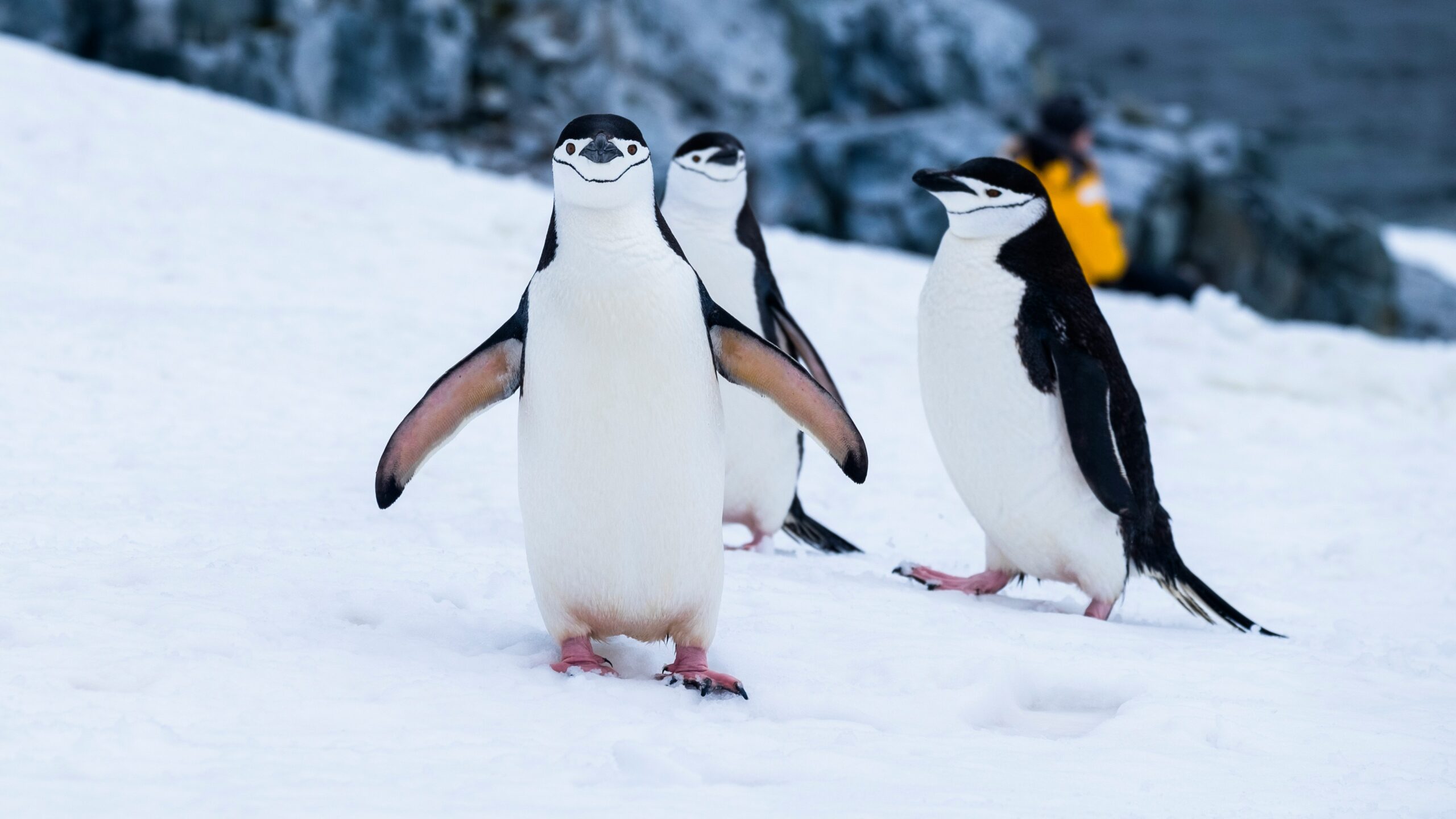
Photo by Derek Oyen
The Commission for the Conservation of Antarctic Marine Living Resources (CCAMLR) has closed its annual meeting in Hobart without agreeing any of the marine protected areas (MPAs) before it. Members also failed to agree new precautionary measures for the Antarctic krill fishery. It is the tenth consecutive year without a new designation.
This year’s talks carried extra weight. China has long been one of the two members, with Russia, blocking new protection in the Southern Ocean. This year it tabled its own MPA proposal for the first time, while also bidding to host the secretariat of the new High Seas Treaty.
“While progress was made, it is still regrettable that there are no meaningful outcomes that would increase protections for ecosystems and species increasingly under pressure from fishing and climate change,” said Claire Christian, Executive Director of the Antarctic and Southern Ocean Coalition (ASOC).
Close, but not there
CCAMLR’s 27 members met from 19 to 30 October and decide by consensus, so any one member can block a measure. Most of the negotiating effort went into the Antarctic Peninsula (Domain 1) MPA, championed by Argentina and Chile. Consensus was not reached, but many members agreed to join an intersessional process to keep negotiations moving before next year’s meeting.
Rodolfo Werner, co-founder of Agenda Antártica, argued that the meeting had moved things forward: “Although consensus was not reached, an important step forward was achieved, placing us in a much stronger position to secure agreement on the establishment of the D1 MPA in the near future.” Nicholas Kirkham of Pew Bertarelli Ocean Legacy was blunter. He said that “despite extraordinary efforts by the representatives of Argentina and Chile to find common ground, the Commission once again failed to reach consensus on protecting this globally important ecosystem.”
The Antarctica2030 campaign took a cautiously optimistic line. Lord Zac Goldsmith, the former UK environment minister and one of its champions, said: “After ten years of stalemate, the deadlock does seem to be cracking, and that matters. But penguins, seals and whales cannot feed on good intentions.” Former US Secretary of State John Kerry helped broker the Ross Sea MPA in 2016. He said: “This year, nations have come closer to another breakthrough agreement, and that is encouraging, especially in divided, polarized times. But close enough isn’t enough.”
China’s proposal, on its own terms
China’s proposal was first revealed by South Africa’s Daily Maverick. It covers 127,000 km² of East Antarctica’s “Cosmonauts Sea” and is intended to protect feeding grounds for Adélie penguins, whales and seabirds. But the draft explicitly offers “seasonal protection.” Commercial krill fishing would be allowed in different zones for roughly six weeks to two months each year, and the MPA would expire after 20 years unless members agreed by consensus to renew it.
A companion document would rewrite CCAMLR’s MPA rulebook. The tracked changes delete two of the existing purposes for which protected areas can be established: protecting features critical to local ecosystems, and maintaining resilience to climate change. The changes would also raise the evidence required for future proposals. Existing proposals, some negotiated for nearly a decade, “should be improved” to comply.
China says it first set out this step-by-step approach in 2023. It argues that MPA objectives should be “specific, practical and verifiable.”
Klaus Dodds, professor of geopolitics at Middlesex University London, told Daily Maverick the proposal signals a willingness to rewrite CCAMLR’s rules, adding: “Beijing is not interested in long-term blanket bans on fishing.” Others were more welcoming. Professor Alan Hemmings described the CCAMLR MPA process as effectively stalled and said “even a less than perfect proposal is surely better than nothing.”
The secretariat race
The timing matters because of a separate vote. The High Seas Treaty (BBNJ Agreement) entered into force on 17 January 2026. Its first Conference of the Parties in January 2027 will choose where to base the secretariat, from three candidates: Xiamen, Valparaíso and Brussels.
China’s offer is the most generous. According to Dialogue Earth, free premises and five years of utility costs would save the secretariat at least USD 70 million, plus a USD 3 million pledge to the BBNJ trust fund. Belgium has offered five years of office costs and USD 70,000. Chile has offered an office at its own expense but has not said for how long.
Yi Xianliang, China’s special envoy for BBNJ secretariat affairs, told China Daily that Xiamen would be the first global UN institution headquartered in Asia. He closed with: “China is ready. Xiamen is ready.” Foreign Minister Wang Yi’s welcome message on the official bid site is more expansive: “Give China this opportunity, together we will create a legend for the world.”
The bid has drawn scrutiny. Blue Marine Foundation, citing Planet Tracker analysis, notes that China operates the world’s largest distant-water fleet: officially 2,551 vessels, but by some independent estimates more than 16,000. Its krill fleet already has twice the carrying capacity of Norway’s, the largest krill-fishing nation by catch.
Li Shuo of the Asia Society Policy Institute told Dialogue Earth: “Behind this secretariat lies a fundamental question. Can China’s actions dispel international concerns, and can it meet global expectations?” He suggested the candidates could avoid a contested vote by sharing the secretariat. China would provide the venue and infrastructure, while Chilean and EU professionals would lead it.
Chile’s own bid faces questions too. Dialogue Earth reports that the Kast administration, which took office in March, has suspended dozens of environmental measures introduced under its predecessor, though it remains committed to Valparaíso.
Blue Marine’s Dan Crockett argued that Hobart was a test of whether China’s governance ambitions are sincere: “Hosting a United Nations institution isn’t simply about winning, it carries a responsibility to act well in the interests of the world.”
Emily Grilly, Ocean Conservation Manager at WWF-Australia, made the same link: “With the first Conference of the Parties to the High Seas Treaty (BBNJ Agreement) approaching, and global momentum for ocean protection growing, CCAMLR must accelerate its decision making to match the urgency and ambition needed to safeguard marine biodiversity.”