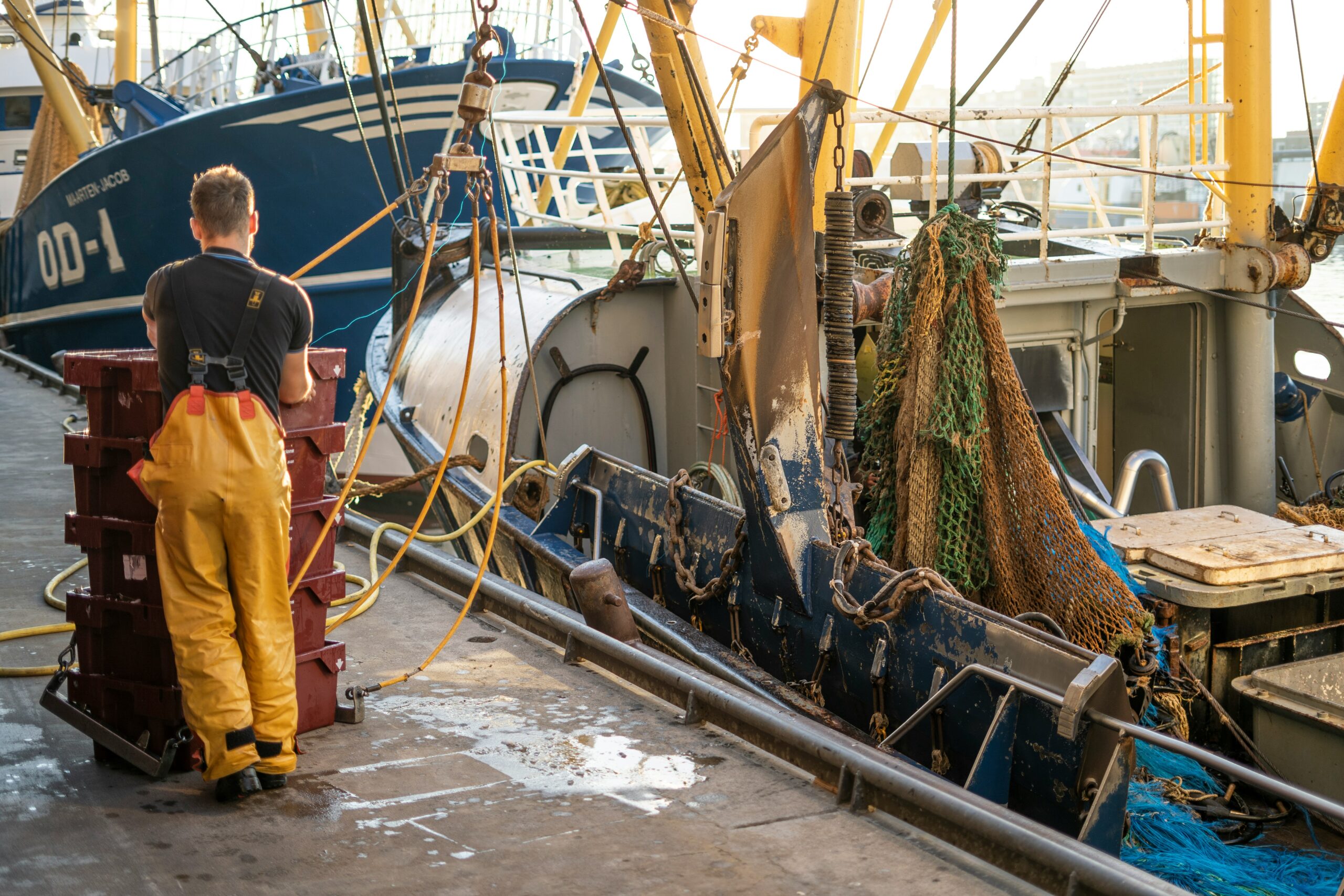
Photo by Paul Einerhand
Coastal states have agreed total allowable catches (TACs) for blue whiting and Norwegian spring-spawning herring for 2027, with both set in line with scientific advice from the International Council for the Exploration of the Sea (ICES). The agreement, announced by the Norwegian government on 15 October, sets the blue whiting TAC at 1,064,191 tonnes and the herring TAC at 588,004 tonnes. Both figures follow the long-term management plans the coastal states have agreed.
Attention now turns to mackerel, the most valuable and most contested of the north-east Atlantic’s shared pelagic stocks. Talks between the Faroe Islands, the UK, the EU, Greenland, Iceland and Norway opened in London on 20 October and are due to continue through Thursday.
Higher catches for both stocks
The 2027 blue whiting TAC is around 25% higher than the 2026 limit of 851,344 tonnes, while the herring TAC is up around 10% on the 533,914 tonnes agreed for this year. The consultations took place at the headquarters of the North-East Atlantic Fisheries Commission in London, with herring and blue whiting scheduled for 13 to 15 October and mackerel for 20 to 22 October.
Norway, the EU, the UK, the Faroe Islands and Iceland are the coastal states for blue whiting. For Norwegian spring-spawning herring they are Norway, Russia, the UK, the Faroe Islands and Iceland, as The Fishing Daily reports.
Norway’s Minister of Fisheries and Oceans, Marianne Sivertsen Næss, said agreement on quotas in line with the management plan and the scientific advice provided a good basis for sustainable management, and for further work towards comprehensive agreements on how the stocks are shared.
Totals agreed, shares still unresolved
The agreements cover total catches only. The coastal states have committed to keep working towards comprehensive arrangements for dividing the stocks between them, but none is yet in place. Under the current allocation, the Faroese blue whiting quota will be just under 380,000 tonnes, 75,000 tonnes more than this year, and its herring quota just under 60,000 tonnes. Norway’s final national quotas will be set once regulations are adopted and figures for quota swaps and completed fishing are available.
This is the gap to watch. Agreeing a total in line with the science is an important step, but without agreed shares each party sets its own quota. A TAC agreement on its own cannot guarantee that those national quotas will add up to no more than the advised total.
A harder round ahead for whitefish
The pelagic agreements may prove the easier part of this year’s negotiations. ICES has again advised zero catch in 2027 for all cod stocks in the Northern Shelf, an area covering the English Channel, the North Sea up to Norway and the west of Scotland. It gave the same advice for 2026, but the UK, EU and Norway agreed a TAC of 14,034 tonnes, a 44% reduction on the previous year.
A group of 29 scientists from universities in the UK and abroad has written to Environment Secretary Angela Eagle urging the government to set catch limits in line with scientific advice. The letter describes the UK as among the “key contributors to setting total allowable catches above scientific advice”, and warns: “If scientific advice continues to go unheeded, this runs a serious risk of permanently harming these fisheries and the economies of coastal communities across the UK.” An official assessment by the Centre for Environment, Fisheries and Aquaculture Science (Cefas), published in April, found that most quotas negotiated by the UK for 2026 were not set in line with scientific recommendations.
This week’s mackerel talks, followed by the trilateral negotiations with the EU and Norway, will show whether the outcome for blue whiting and herring sets the tone for this year’s round or proves the exception.