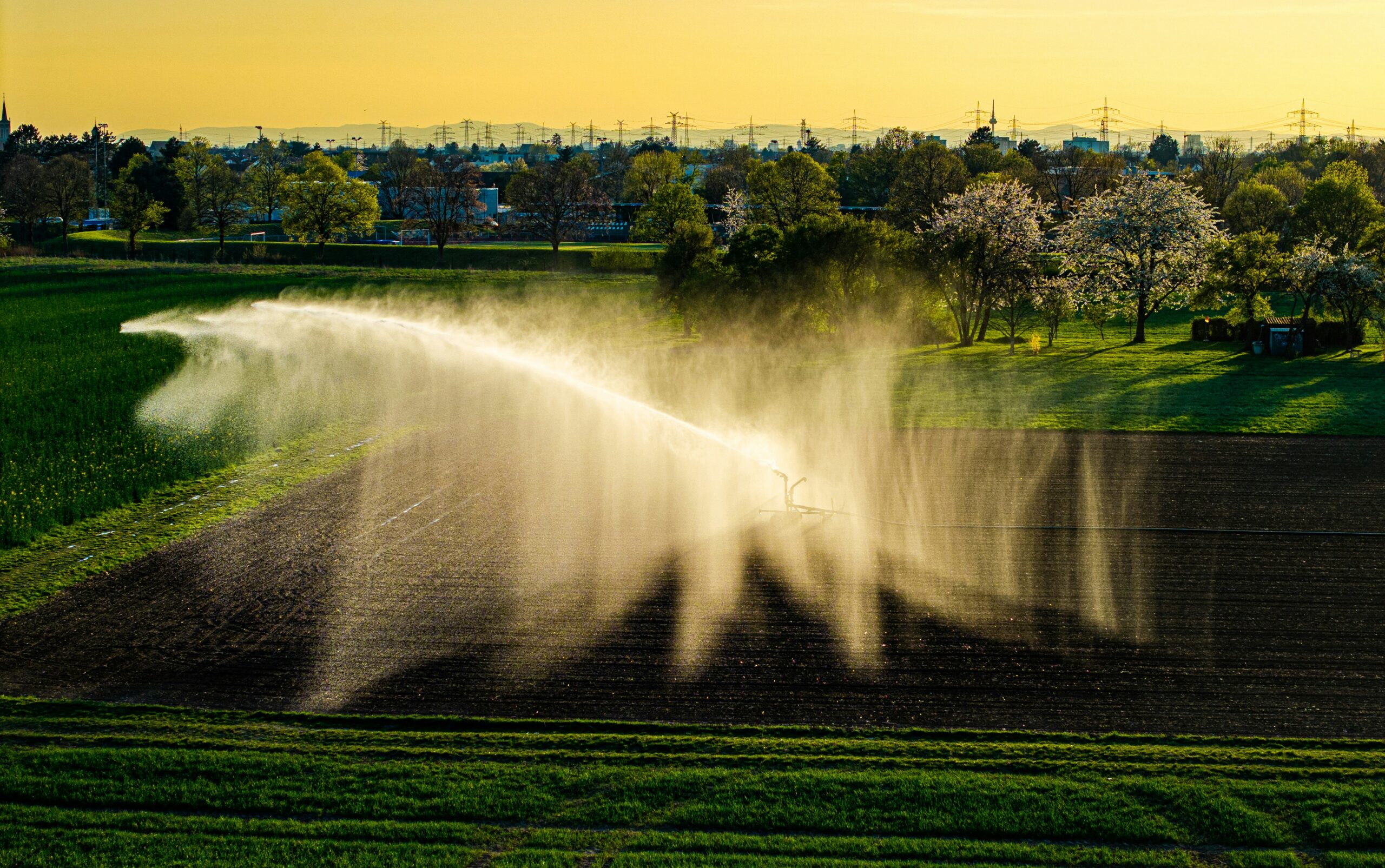
Image description: A sprinkler irrigation system sprays water over a cultivated field, creating a mist in the air. The surrounding area includes green grass, trees with spring foliage, and a backdrop of buildings and utility poles under early morning light. Photo by Bernd 📷 Dittrich on Unsplash
Three scenarios for winter refill
On 2 November the Environment Agency published its winter outlook for refilling agricultural storage reservoirs, setting out three scenarios for rainfall between November and March. Under average rainfall, most reservoirs are expected to refill before spring, though prospects are only moderate in the West Midlands, Devon, Cornwall and East Anglia. At 80% of average, refill prospects fall to poor in those four areas and Section 57 emergency restrictions on spray irrigation become more likely in 2027. At 60%, prospects are poor across many parts of the country, with widespread winter hands-off flow restrictions, a significant risk of Section 57 restrictions in spring and the possibility of outright irrigation bans. The EA says that reservoir levels have fallen to record lows in some areas after an early irrigation season and summer abstraction restrictions, and that poor grass growth has already forced livestock farmers to use winter feed reserves early.
Rivers, groundwater and farm support
England received 65% of its long-term average September rainfall, though the EA says cumulative rainfall to 24 October was 99% of average. River flows have improved at about three-quarters of monitoring sites, but four remain exceptionally low, namely the Ely Ouse, the Derwent, the Swale and the Tone, and groundwater continues to fall at many sites. The EA urges farmers to review their licences now and to use short-term options such as regulatory position statement RPS 300, which allows abstraction of floodwater outside licence conditions during flood warnings, and water rights trading. Longer term, up to £15m is available through a new round of the Water Management Grant, announced by the Prime Minister on 15 August, to help build on-farm reservoirs, with details due from Defra this autumn. The NFU’s Mark Betson said the summer has created a water deficit that will be difficult to make up over winter, and encouraged growers to join abstractor groups. An updated prospects report is due at the end of February 2027.
The report shows that drought pressure is carrying over into 2027, with agricultural abstraction competing for limited winter recharge alongside public water supply. Water companies in the most exposed areas, including Anglian, South West and Severn Trent, will be watching for any Section 57 restrictions and for how winter rainfall affects river flows and groundwater.
Sources: