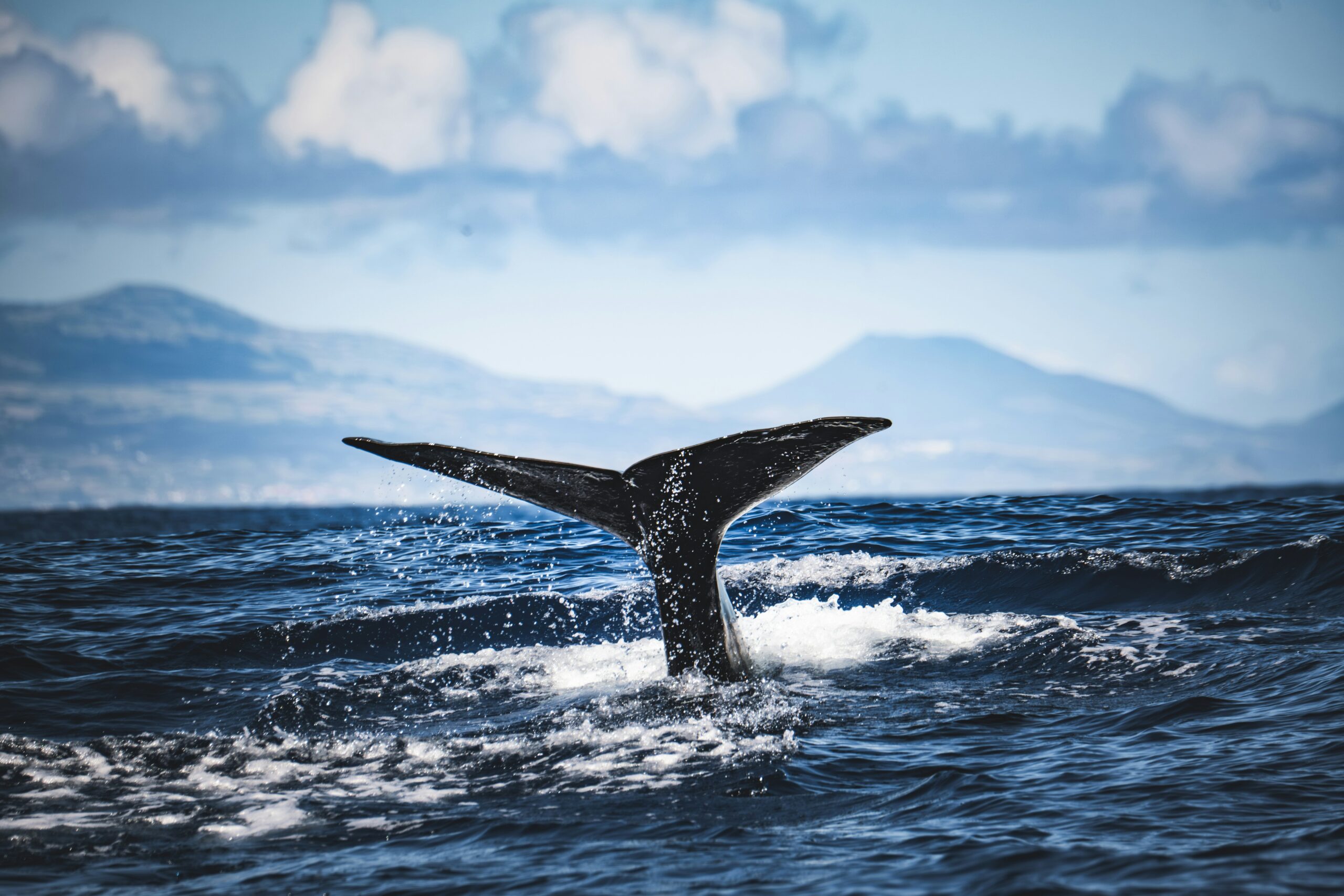
Photo by Francesco Ungaro
Large passenger and cargo ships regularly travel at speeds likely to kill whales through one of the Mediterranean’s most important cetacean habitats, a Guardian investigation has found. The investigation used data from maritime intelligence firm Veson Nautical and Global Fishing Watch. In 2025, ships spent more than 280,000 hours at 15 knots or above in the north-western Mediterranean particularly sensitive sea area (PSSA), which includes the Pelagos Sanctuary. Collisions at that speed almost always kill, while strikes below 10 knots are unlikely to be fatal.
The sea between Valencia and Genoa is home to about two-thirds of the Mediterranean’s fin whales and more than a fifth of its sperm whales. Both populations are listed as endangered.
A small number of vessels account for the fastest transits. Ships spent more than 6,000 hours above 25 knots in the area. Seven vessels, four Baleària fast ferries and three Grimaldi cruise ferries, were responsible for 70% of that time. The investigation names four companies whose ships frequently travelled at 15 knots or above: Grimaldi Group, Corsica Ferries, Baleària and Moby Lines.
A recommendation, not a rule
The International Maritime Organization designated the PSSA in July 2023, with a voluntary recommendation that vessels of 300 gross tonnes and above slow to between 10 and 13 knots. Earlier analysis by OceanCare and Quiet-Oceans found that 80% of merchant ship journeys in the area in 2023 were above 10 knots. The International Whaling Commission told the Guardian it has recorded six incidents in the area since July 2023, five near misses and one collision, and believes most strikes go unrecorded.
The Guardian spoke to six current and former captains of Grimaldi and Moby Lines ships. They said their companies had not introduced measures to encourage slower sailing. “As long as it’s only a recommendation, nobody will reduce speed,” one Grimaldi captain said.
Simone Panigada, president of the Tethys Research Institute, said it is time to “move, progressively, from voluntary to mandatory” rules. “A binding framework would create more level conditions for all operators, encouraging compliance among shipping companies and ensuring the adoption of these measures doesn’t rest solely on individual corporate decisions,” he continued.
The commercial case
Thomas Folegot, chief executive of Quiet-Oceans, said container ships could cut their speed slightly, but that ferries face a much harder choice: “For their business, it’s a killer.” Wei-Jun Mun, director of public policy at the World Shipping Council, said the industry is committed to the PSSA’s protective measures, but pointed to “commercial trade-offs and operational concerns”, including the need to add ships to keep schedules reliable.
Corsica Ferries said it instructs captains to slow to 10 to 13 knots in the PSSA, but noted its captains report a reduced ability to avoid cetaceans that surface suddenly at lower speeds. Baleària said none of its fast ferries had recorded a collision with a cetacean, and both companies pointed to crew training, real-time monitoring and conservation partnerships. Grimaldi and Moby Lines did not respond.
Time spent above 15 knots fell by 11% between 2022 and 2025, and time above 25 knots by about a third. Olivia Watkins, associate director at Veson Nautical, attributed this mainly to factors such as changed routes: “The PSSA recommendation is unlikely to be a significant cause of the year-on-year decline in the data results.”
Populations under pressure
The most recent ACCOBAMS survey, in 2018 and 2019, estimated 2,135 fin whales and 1,416 sperm whales in the Mediterranean. A 2023 study cited by Magma estimated that collisions kill at least 16.6 fin whales a year, a level that prevents the population from recovering.
Researchers in the region see the damage directly. “I would say one-third of the sperm whales we have encountered carry ship strike marks,” Aylin Akkaya, scientific director of DMAD, told Magma. Renaud Corniquet of ACCOBAMS noted that “a mandatory speed reduction in such a large area has not been implemented so far.”
Ferries are also part of the monitoring effort. CIMA Research Foundation has used Corsica Ferries crossings as survey platforms since 2008. This summer, its observers logged 395 sightings of seven species across 34 surveys in the Pelagos Sanctuary, including 130 sightings of fin whales.