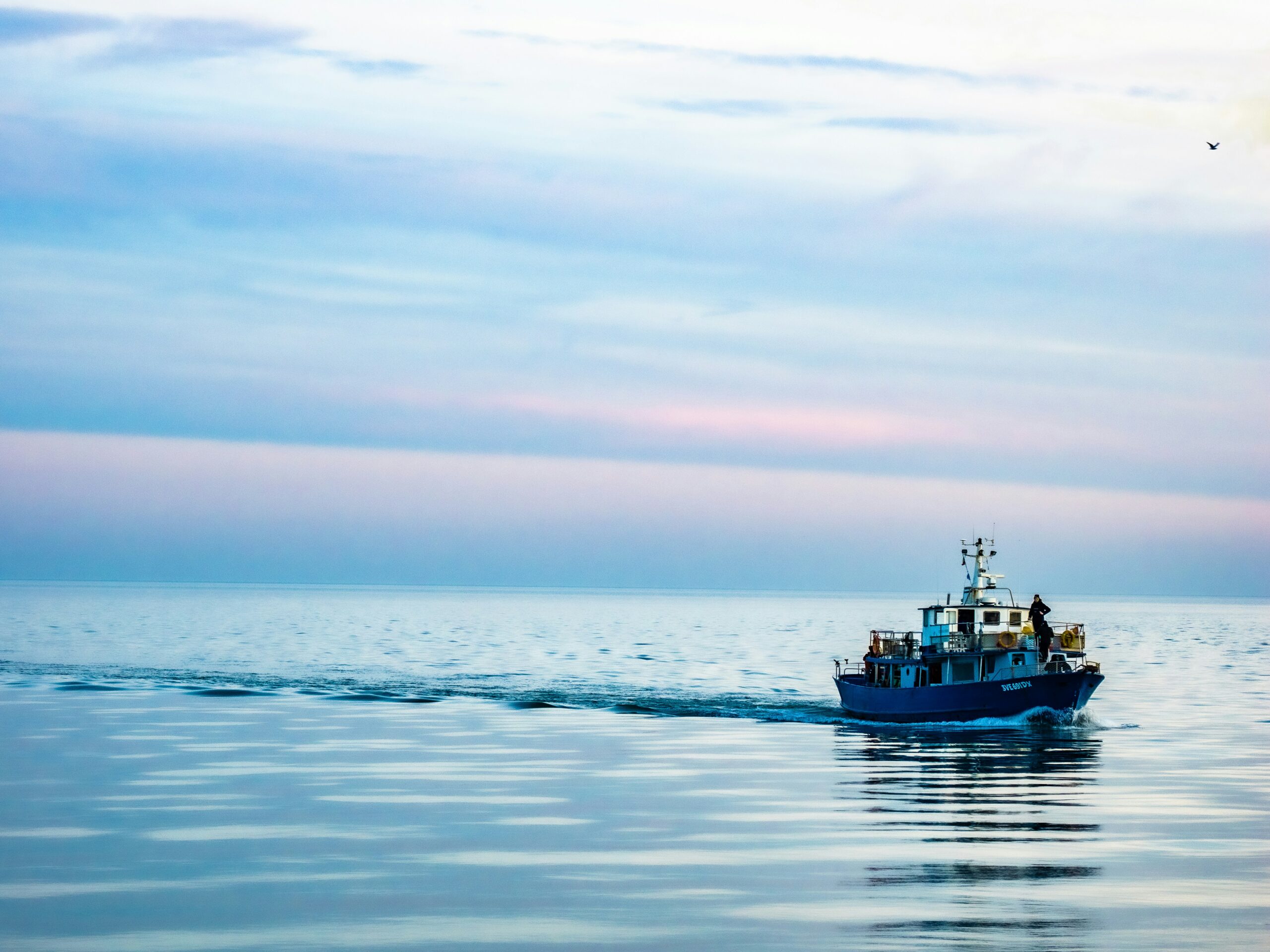
Photo by Diego Romeo
The UK’s national fishermen’s organisations have written a joint letter to the chancellor warning that continuing high diesel prices are crippling the fishing industry, and asking for direct financial support. The Scottish Fishermen’s Federation (SFF), the National Federation of Fishermen’s Organisations (NFFO), the Northern Ireland Fishermen’s Federation and the Welsh Fishermen’s Association tell the chancellor that ‘the persistently high price of fuel now poses an existential threat to our industry’, and that an increasing number of fishing businesses are no longer viable.
The federations also reject suggestions that fishermen already receive enough help through red diesel and marine voyages relief. Both were in place before the current crisis, they argue, in recognition that fishing is an energy-intensive industry. NFFO assistant chief executive Mike Roach told Fishing News that fuel prices were now ‘crippling’, which was why the federations had gone directly to the Treasury after previous letters brought no results.
A second price spike
The letter follows months of warnings. Six months after the start of the US war with Iran, the NFFO reported in September that the average price of diesel was only a penny below the peak it reached in April. “The price of diesel has doubled since the start of the conflict and there are no signs that this will be some short-lived peak before a return to previous levels,” the federation said.
The NFFO described a ‘vicious spiral’ in which skippers work longer hours and travel further to cover their costs, burning yet more fuel. Because fishermen are price takers at auction, they cannot pass those costs on. “It is sheer madness that a well-run vessel can have a successful trip and find out on selling their catch that they have made a loss, but this is the situation that NFFO members are reporting around the country,” it said, adding that some processors were already struggling to pay staff because of reduced supply from the UK fleet.
Competitors with subsidised fuel
A recurring frustration is that European governments have moved faster. France, the Netherlands and Spain have all announced fuel support packages for their fleets, and the EU has mobilised its own crisis response schemes. “Our direct competitors are using subsidised fuel to work in British waters, where our own boats cannot afford to go,” the NFFO warned.
SFF chief executive Elspeth Macdonald made the same point in October, when the federation wrote to ministers as prices hit record levels. “We do think there is a case for financial support, particularly when you see some of the EU countries providing financial support to their vessels which are fishing in our waters, which is pretty galling for our members to see,” she said.
What the industry is asking for
The NFFO has proposed that the government’s existing Fishing and Coastal Growth Fund could be refocused, without new money, to provide short-term relief. It acknowledges that the fund was designed to support growth, but argues that “if we do not act, there will be no businesses left to grow”. The federation frames the issue as economic, social, food supply and national security all at once, and concludes: “The government must act before a crisis becomes a disaster.”
No response from the Treasury to the joint letter had been published at the time of writing.