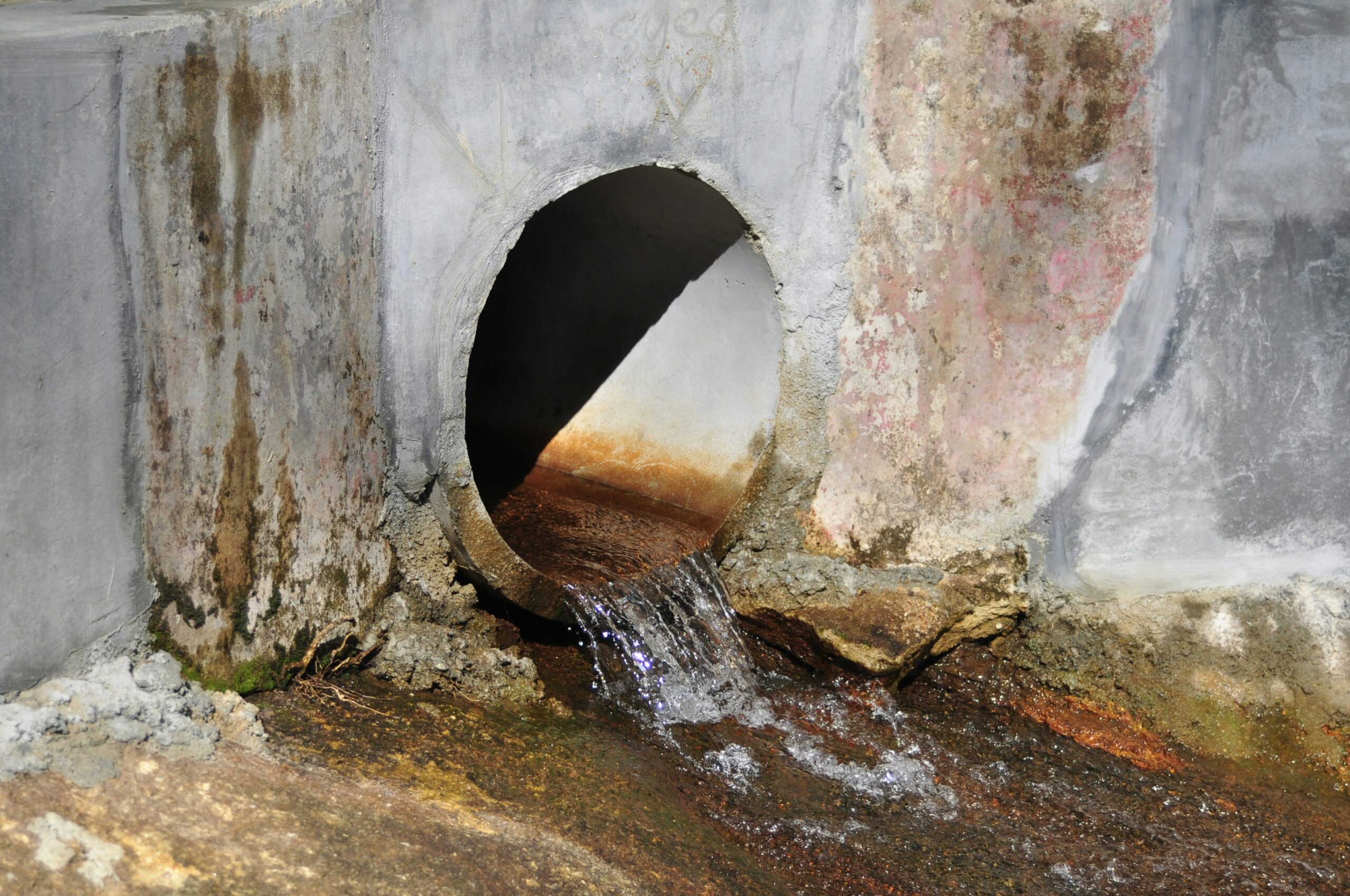
 Photo description: Wastewater flowing out of a concrete pipe. Photo by Abdullah Wafiyy on Unsplash
£1.4bn in trade effluent revenue
A joint investigation between Watershed Investigations and River Action, first reported in the Guardian, has produced the first national picture of the trade effluent consent system in England and Wales, compiling a database of 26,131 consents.
The figures reveal that water companies reported at least £1.4bn in trade effluent revenue over the past six years, including £336m in 2025/26 alone. River Action says this figure is likely an underestimate, as South West Water declined to disclose its revenues on commercial sensitivity grounds.
A regulatory black box
Consented volumes allow for up to 607.6 billion litres of industrial wastewater to enter sewage treatment works annually, from sources including power stations, pharmaceutical plants, food factories, hospitals, abattoirs, and waste handling facilities. Thames Water holds the largest volume of consented trade effluent at approximately 113 billion litres per year, followed by United Utilities at 104.6 billion litres and Severn Trent at 78.8 billion litres.
Under the current framework, water companies are legally required to accept industrial wastewater and issue trade effluent consents. Critically, they also set the charges, determine what they will accept, and are responsible for enforcing consent conditions, with no independent regulator overseeing individual consents and no central national register. The Environment Agency (EA) has no direct role in the consent process, and the framework itself has not been substantively updated in over 30 years, predating current understanding of contaminants such as PFAS (a.k.a forever chemicals). One EA officer cited landfill leachate as a particular concern, noting that by the time hazardous substances are identified in incoming waste, the material has already entered the treatment process.
Treatment limitations and downstream risks
The investigation highlights a fundamental mismatch between the nature of industrial wastewater and the capabilities of conventional sewage treatment infrastructure. Most treatment works rely on biological processes designed principally for domestic sewage and are not equipped to remove industrial chemicals including PFAS, solvents, flame retardants, pharmaceuticals, cyanide, chromium, cadmium, and mercury. Contaminants that survive treatment are discharged to rivers, lakes, and coastal waters as treated effluent, while those captured in sewage sludge may subsequently be spread on agricultural land. Industrial wastewater volumes also add hydraulic pressure to sewer networks, potentially contributing to combined sewer overflow events in which untreated industrial waste is discharged alongside raw sewage.
Regulatory and policy response
Defra has stated that water companies should never profit from pollution and that the Government intends to reform how wastewater is disposed of and close existing regulatory loopholes. The Environment Agency has acknowledged the framework is outdated. Water UK has called for bans on toxic substances at source and for manufacturers to bear the costs of their removal. River Action has called on the Government to address the system through the forthcoming Clean Water Bill.
What next?
This investigation raises questions about the interaction between trade effluent consenting, PFAS and contaminant loading at treatment works, sludge quality and land spreading risk, and the relationship between industrial wastewater volumes and CSO performance. As regulatory scrutiny of chemical contaminants intensifies, particularly around PFAS, the adequacy of the existing consent framework is likely to face increasing pressure from both government and environmental regulators.
Read more:
The Guardian: exclusive coverage of the investigation