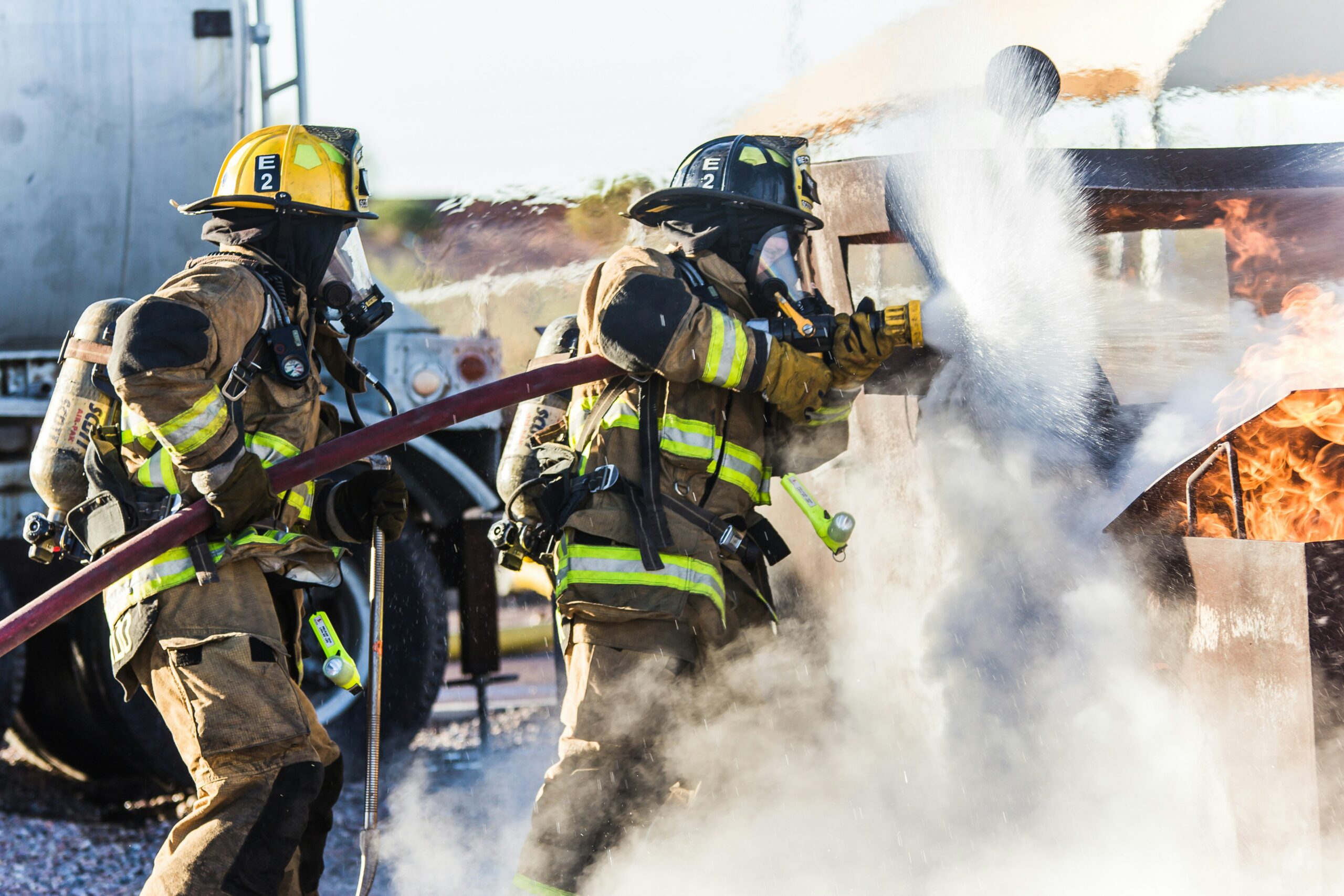
Image description: Two firefighters training tackling a spreading fire with a water house. Photo by Matt C on Unsplash
Kent outages cited as evidence of weak contingency supply arrangements
The House of Lords National Resilience Committee published Are we ready? Building a culture of resilience on 16 November 2026, warning that the UK is seriously underprepared for escalating threats such as cyber-attacks, extreme weather and infrastructure disruption, which can interact and cascade across essential services.
For the water sector specifically, it recommends that companies be required to demonstrate they can maintain emergency supplies and distribution during prolonged outages. The committee highlighted recent outages in west Kent as a key example, where bottled water had to be transported from distant locations, companies lacked enough staff to run distribution stations, and residents travelled long distances to find stocks exhausted within hours. It also calls for the Government to set out how essential food and water supplies will be maintained during prolonged disruption, including stronger domestic production and secure supply arrangements with the EU and other partners.
A tiered framework and stress testing could bring statutory duties for the most critical operators
The committee proposes a tiered business resilience framework. Tier 1 businesses essential to national resilience would face statutory preparedness and continuity duties and regular stress tests, Tier 2 organisations would be covered through contractual requirements, and others through voluntary guidance and incentives.
Water Magazine’s coverage notes that the report does not say which water organisations would fall into each tier. The report also recommends regular cross-sector stress tests for critical sectors including water, modelled on the financial sector, and asks the Government to say who would oversee the regime.
Committee chair Baroness Coussins said, “we are awash with resilience strategies and action plans which don’t relate to each other”, noting that the private sector owns 80 per cent of critical national infrastructure, while 95 per cent of the food sold in the UK is sold through only nine retailers. The report adds that current plans largely address single emergencies rather than several occurring at once, and that data sharing remains too fragmented to ensure vulnerable people are informed and supported.
The report also recommends that local resilience arrangements identify and publicise accessible local stocks of food and water, with volunteer systems to deliver supplies to those unable to collect them. In the report’s discussion of legislation, it notes that the Clean Water Bill is intended to provide for statutory resilience standards, asset mapping and longer-term planning. Margaret Read, Strategy and Policy Director at the National Infrastructure and Service Transformation Authority (NISTA), told the committee that measures in the Clean Water Bill would extend existing resilience requirements to certain third parties.
Water companies should expect resilience to be tested and evidenced, not assumed
The recommendation signals that emergency supply capability could become a formal, evidenced obligation rather than a matter of company discretion, with stress testing a possible mechanism. Companies will want to watch how the Government defines the Tier 1 category and how the Clean Water Bill’s resilience provisions develop, and may wish to review their own contingency arrangements for bottled water distribution, staffing and support for vulnerable customers.
Sources:
House of Lords National Resilience Committee Report: Are we ready? Building a culture of resilience
Water Magazine: House of Lords urges water companies to prove emergency supply resilience