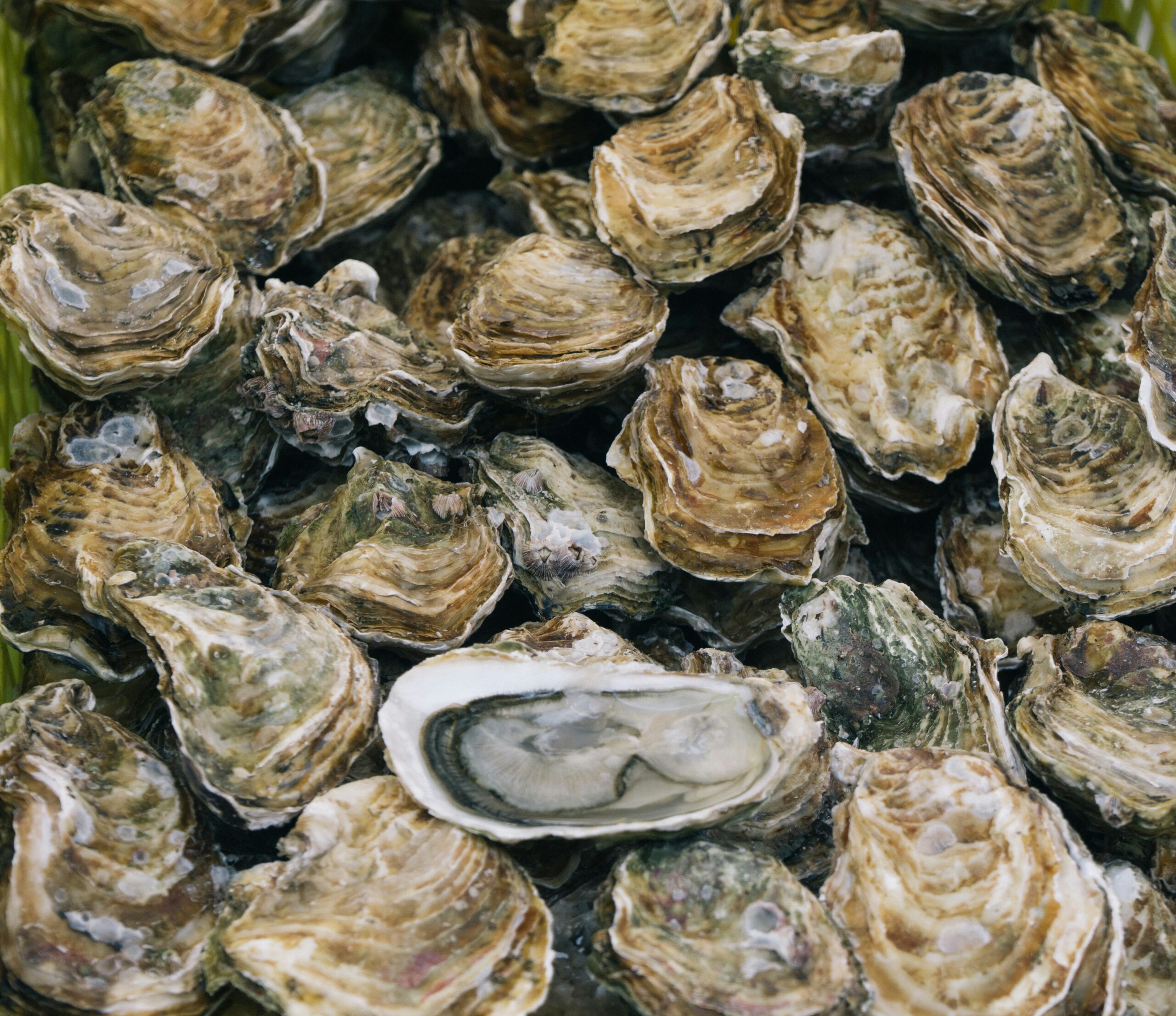
Photo by Ben Stern
Native oysters have been born in the Dornoch Firth for the first time in more than 100 years, Heriot-Watt University has announced. The Guardian reports that it is the first time in the UK that wild oysters have been bred at a site where they had been locally extinct for more than a century. The firth’s original population was probably fished out in the late 1800s, as happened to most of Europe’s native oysters.
“This is a moment over 12 years and 140,000 oysters in the making,” said Professor Bill Sanderson of Heriot-Watt University, who leads the project. He described the confirmation that the oysters were reproducing naturally as “a very significant milestone”.
How the find was made
Gurjameer Ramday, a research associate on the project, found the baby oysters, known as spat, during routine monitoring by Heriot-Watt’s field laboratory in Dornoch. The spat were only a few millimetres across. Invertebrate curators at National Museums Scotland and Amgueddfa Cymru – Museum Wales checked images of them and confirmed the identification. On a return visit this summer, the team found some had grown to the size of a 50p piece, according to PA Media. The team says this confirms the population is reproducing.
Ramday said warmer seas had played a part. “Sea conditions were warm in 2025, and this year in particular,” he said. “So we have been extra vigilant and hopeful that this could be the year when we saw them.”
Twelve years in the making
The Dornoch Environmental Enhancement Project (DEEP) was formed in 2014 by The Glenmorangie Company, Heriot-Watt University and the Marine Conservation Society. Its first 300 oysters, from Loch Ryan near Stranraer, went into the firth in 2017 as a trial to test whether they would survive. Loch Ryan is one of the UK’s few surviving native oyster fisheries. By October this year, volunteers and scientists had hand-cleaned and released more than 140,000 juvenile oysters, and about 3,000 are now reaching maturity across two established beds. Another 5,000 were added last week.
Those beds are key to attracting new settlers. “We have found that there is nothing like the presence of other oysters and shell reef material to draw them in,” Sanderson explained.
The team’s target is around four million oysters by 2031, which depends on additional funding. “We have to keep going until the rate at which the babies that are produced exceeds the rate at which they’re eaten by crabs and starfish,” Sanderson said. The project’s earlier research, published in PLOS ONE, set out the potential prize. “We know from studying oyster habitats that when you establish an oyster reef, it’s very likely that over a decade you’re going to double the diversity on the seabed,” Sanderson said.
“We are so excited that oysters in the Dornoch Firth have successfully reproduced,” said Sandy Luk, chief executive of the Marine Conservation Society. “This historic milestone shows what is possible and will help inform our oyster regeneration projects across the UK.” Caspar MacRae, president and chief executive of The Glenmorangie Company, added: “Rather like whisky, restoration takes time.” DEEP has also won the Water Awareness and Conservation category at this year’s National Sustainability Awards.
A wider recovery effort
The scale of what was lost is stark. Billions of native oysters once formed vast reefs around Britain, and at the height of the Victorian trade, 30 million oysters a year were landed from the Firth of Forth alone. European oysters are now listed as critically threatened.
DEEP was among the first projects of its kind in Europe. Around a dozen newer UK schemes have followed, including Seawilding in Argyll, the Essex Oyster Restoration Initiative and the Solent Oyster Restoration Project. Restoration Forth has returned 60,000 oysters to the Firth of Forth since 2022.
The milestone comes with caveats. Conservationists remain concerned about overfishing, pollution and policies on fishing gear that is dragged along the seabed, which can damage reef habitat. “There’s vulnerabilities in all of this stuff,” Sanderson said. “But there is also incredible hope.”