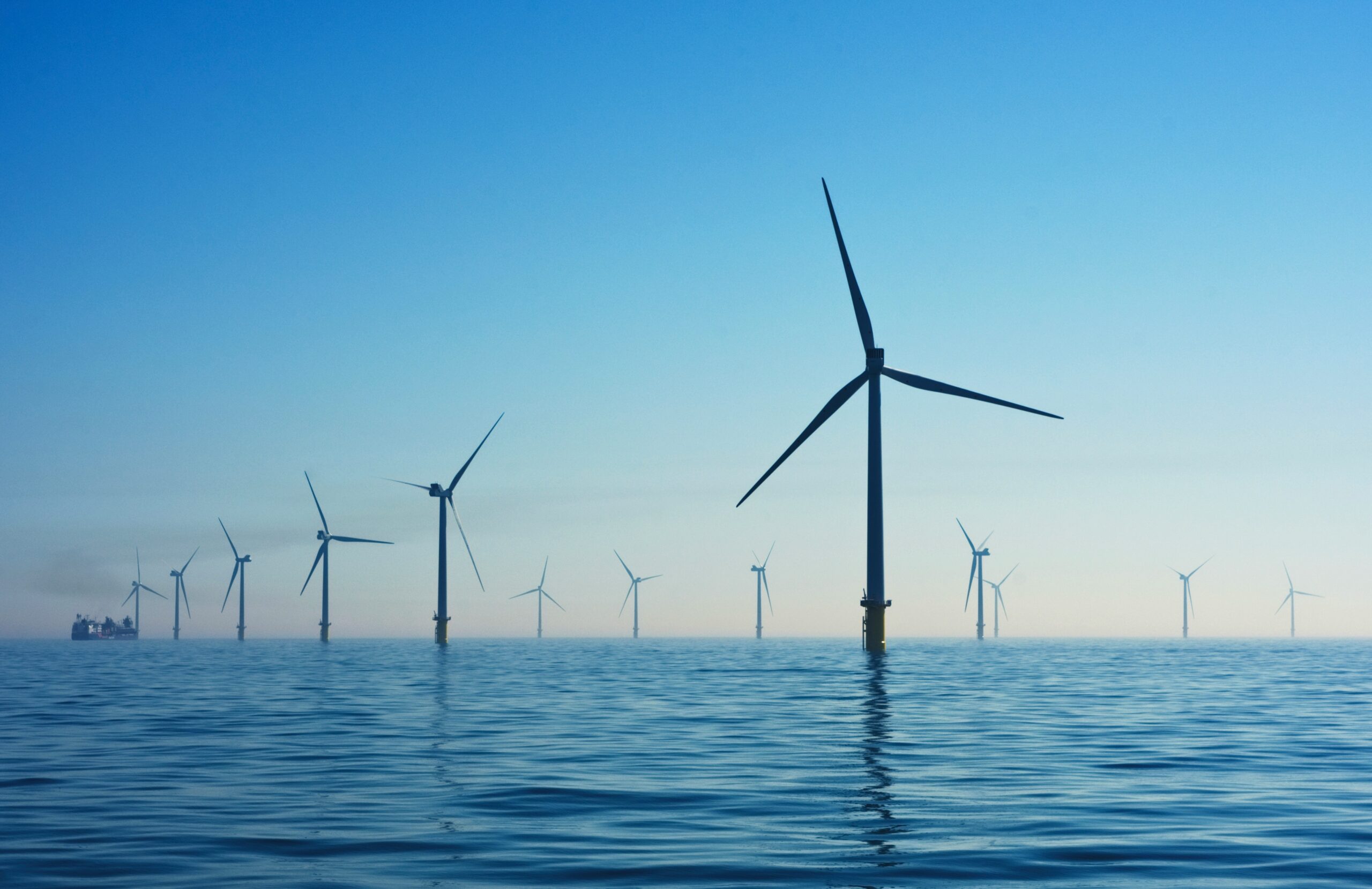
Photo by Nicholas Doherty
Nature-inclusive scour protection installed at RWE’s Rampion offshore wind farm has come through its first winter intact, according to a first “snapshot” study of its engineering performance. The results, published by ARC marine, show the installation of around 75,000 Reef cubes kept its profile and continued to protect the turbine foundation through a stormy season in the English Channel. A separate survey of the effects on marine life is under way and due to finish by the end of the year.
The cubes were installed around turbine J04 in October 2025 under the Reef Enhancement for Scour Protection (RESP) project, led by RWE and ARC marine. Contractor Rohde Nielsen placed them using a standard fall-pipe vessel, the same method used for conventional rock. Their primary job is engineering: stabilising the seabed around the foundation and preventing scour. Their textured surfaces and internal passageways are also designed to give marine life places to attach and shelter.
Six named storms
According to Ocean News & Technology, the installation faced a winter in which the UK was hit by six named storms. A peak significant wave height of 4.38 metres was recorded at Rampion on 9 January during Storm Goretti.
Bathymetric surveys over the first six months showed the scour pad maintaining its profile. An inspection by remotely operated vehicle in March 2026 found that the distribution of cubes closely matched the original design and model testing, with no significant breakage, and that the mix of cube sizes was interlocking effectively.
Helen Elphick, Technical Innovation Partner for Sustainability and Biodiversity at RWE, said: “These first results from the RESP pilot at Rampion are an important step in building the evidence that nature-inclusive technologies like Reef cubes® can provide the same level of stability and protection as the conventional alternatives.”
Tom Birbeck, founder and chief executive of ARC marine, said: “If Reef cubes® are going to replace conventional rock, they have to perform the same, if not better. These results show they are doing that at full offshore scale, using the same kind of installation methods the industry already understands.”
He pointed to the size of the potential market: “Offshore wind foundations and subsea cables will require significant volumes of scour protection over the coming decades.”
What the results do and don’t show
The findings are encouraging but early. They cover one turbine, one winter and engineering performance only. The ecological question, whether the cubes deliver measurably more habitat value than rock, won’t be answered until the marine life survey reports later this year. When the cubes were installed, RWE and ARC marine said they gave a habitat surface area of 25,000 square metres at that single turbine.
The pilot is co-funded by Innovate UK, and the cubes underwent hydrodynamic stability testing at HR Wallingford before deployment. Monitoring will continue to assess both engineering and ecological performance over the longer term.
For regulators and developers, the significance lies in the evidence base. Nature-inclusive design is increasingly discussed as a way for offshore wind to contribute to marine recovery as well as minimise harm. Full-scale, independently verifiable performance data will be needed before it moves from pilot to standard practice.