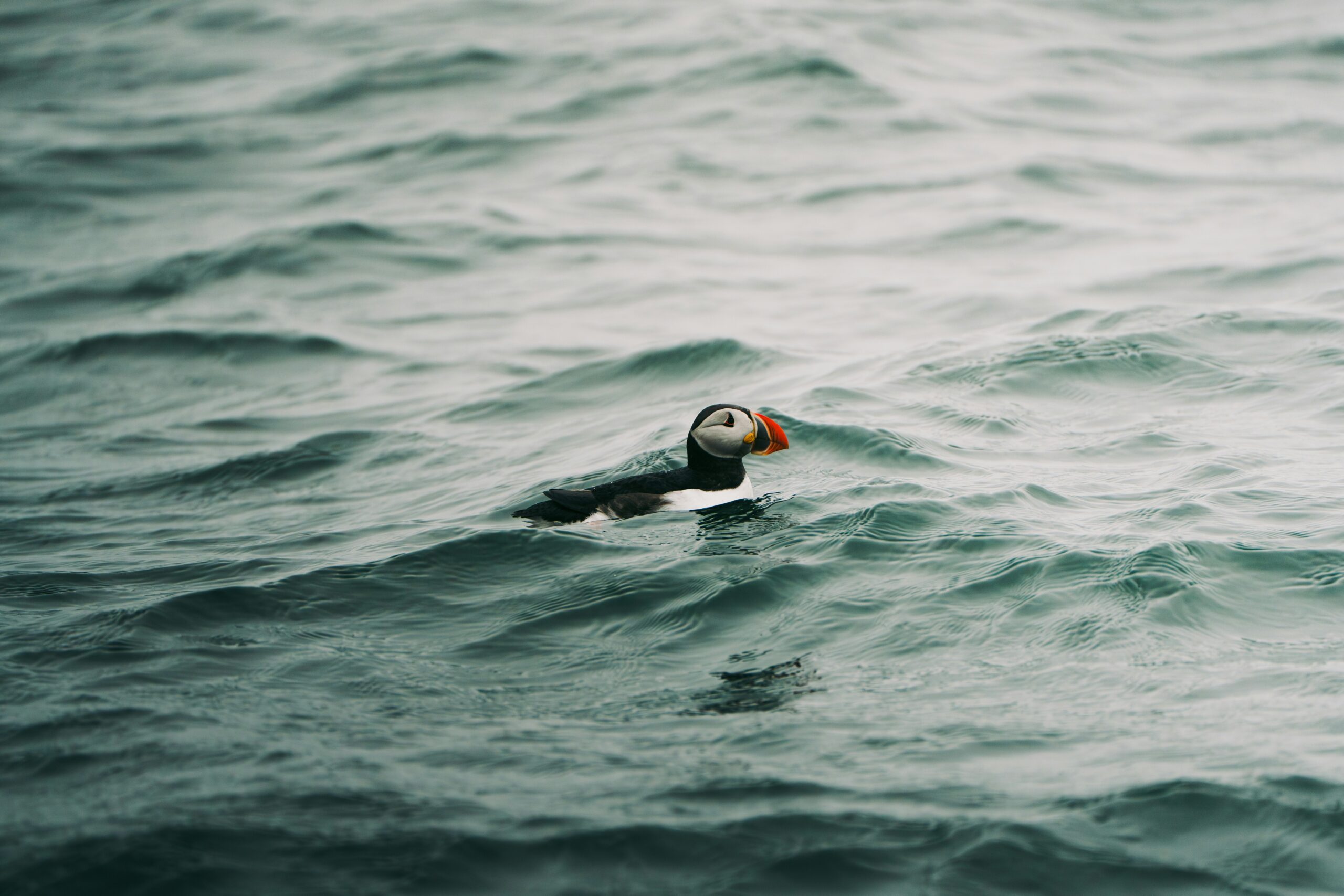
Photo by NIR HIMI
The Scottish Government has published the first annual progress report on its Seabird Conservation Action Plan, finding that work has begun on 36 of the plan’s 50 actions in its first year. The report is candid that this is a story of foundations rather than results. It says meaningful improvements for seabirds will only be seen once actions are fully implemented, and it names funding as a continuing barrier to delivery on the ground over multiple years.
The action plan, published in August 2025 and running to 2045, is overseen by a Delivery Partnership chaired by the Scottish Government. Its members span NatureScot, JNCC, RSPB, the British Trust for Ornithology, the National Trust for Scotland, the Scottish Fishermen’s Federation, the Aberdeen Fish Producers’ Organisation, Scottish Renewables, Crown Estate Scotland and the Scottish Seabird Centre.
A worsening baseline
The plan was launched against a stark backdrop. The Seabirds Count census, the fourth of its kind for Britain and Ireland, found that 14 of the 20 Scottish species with known trends were declining, even before the full effects of highly pathogenic avian influenza were counted. In August, NatureScot’s latest biodiversity indicator reported that seabird numbers are now around half their 1980s level, with Arctic skua down 93% since 1986, little tern down 75% and common tern down 73%. Breeding success has also fallen over the long term.
NatureScot marine ornithologist Bex Outram said that seabird colonies are worth an estimated £127 million a year to Scotland’s economy through wildlife tourism. She added that work under the action plan would need patience: “These efforts will take time to have an impact, which is why long-term monitoring coupled with advances in technology to improve our understanding of seabirds is vital.” Oceanographic noted at the time that the steepest losses were among terns and skuas, while gannet breeding success had partly rebounded after avian flu.
The plan’s reception was mixed. RSPB Scotland welcomed it as long overdue but, after ministers consented the Berwick Bank offshore wind farm days before its launch, director Anne McCall said it “now looks like applying a sticking plaster to a gaping wound.”
Where progress has been made
Island predators are where the most visible groundwork has been done. A new Seabird Restoration and Resilience Officer, funded by the Scottish Marine Environmental Enhancement Fund (SMEEF) and Crown Estate Scotland, has drawn up a ten-year programme of invasive predator removal. Fourteen priority islands have been identified, with feasibility studies complete or under way on eight. SMEEF is funding projects including mink control in the Summer Isles and a rat eradication feasibility study on Eigg. The threat is live: Delivery Partnership minutes from June record active responses to a rat incursion on Mousa in Shetland and stoats on Rousay in Orkney.
On fisheries, industry-led trials of bird-scaring lines and altered float regimes in the longline fleet have shown promising early results in reducing bycatch, with a second round of trials under way. These measures fed into the Future Catching Policy consultation earlier this year. The long-delayed consultation on inshore MPA fisheries management, which the Hebridean Whale and Dolphin Trust had criticised for being pushed back beyond the 2026 election, was finally launched in September and runs until 18 January 2027. According to the progress report, it proposes measures at 50 marine bird MPAs, including restrictions on hydraulic dredging, longlining and static gear. Minister for Agriculture, Marine and the Islands Jim Fairlie said: “Healthy seas are not separate from a healthy fishing industry, they are the foundation of it.”
These sit alongside existing protections for food supply. The ban on sandeel fishing in all Scottish waters, in force since March 2024, survived an EU challenge at the Permanent Court of Arbitration last year, with the tribunal finding that the Scottish closure was based on the best available science.
The report also highlights NatureScot’s refusal of the 2026 licence for the traditional guga hunt of gannet chicks on Sula Sgeir, the first such refusal, after modelling found an adverse effect on the avian flu-hit colony could not be ruled out.
Offshore wind and compensation
The tension between seabirds and offshore wind remains the report’s most difficult territory. New regulations that came into force in May allow developers to compensate for harm to protected sites through measures benefiting the wider MPA network, rather than only the species affected. Statutory guidance published in July explicitly links this to the seabird plan. A proposed Scottish Marine Recovery Fund, consulted on last year, would pool developer payments into strategic compensation. The progress report frames these as a route to investment in seabird recovery, but the Portfolio of Compensatory Measures is still in development.
Gaps and delays
Read against the appendix, the picture is more uneven. Across the plan’s six themes, 26 actions are rated on track, eight are delayed, one is complete and 15 have yet to start. Habitat restoration and public awareness are weakest, with half their actions not yet begun. The habitat actions still waiting include making biosecurity plans a standard condition of consents on seabird islands, and exploring grazing and vegetation management. Several others, including work on light pollution near petrel and shearwater colonies and disturbance at breeding sites, are listed as subject to funding or staff resource in year two.
The delivery machinery itself looks fragile. Both the Delivery Manager post and the new restoration officer post have been secured initially for one year only. The June minutes record that long-term funding for island biosecurity beyond March 2027 is still unresolved, and that delayed actions reflect funding uncertainty and staffing constraints. Partners also stressed the need to distinguish progress on the plan’s actions from actual conservation outcomes.
With most actions not expected to show measurable benefits for years, the second annual report will be an early test of whether long-term funding follows.