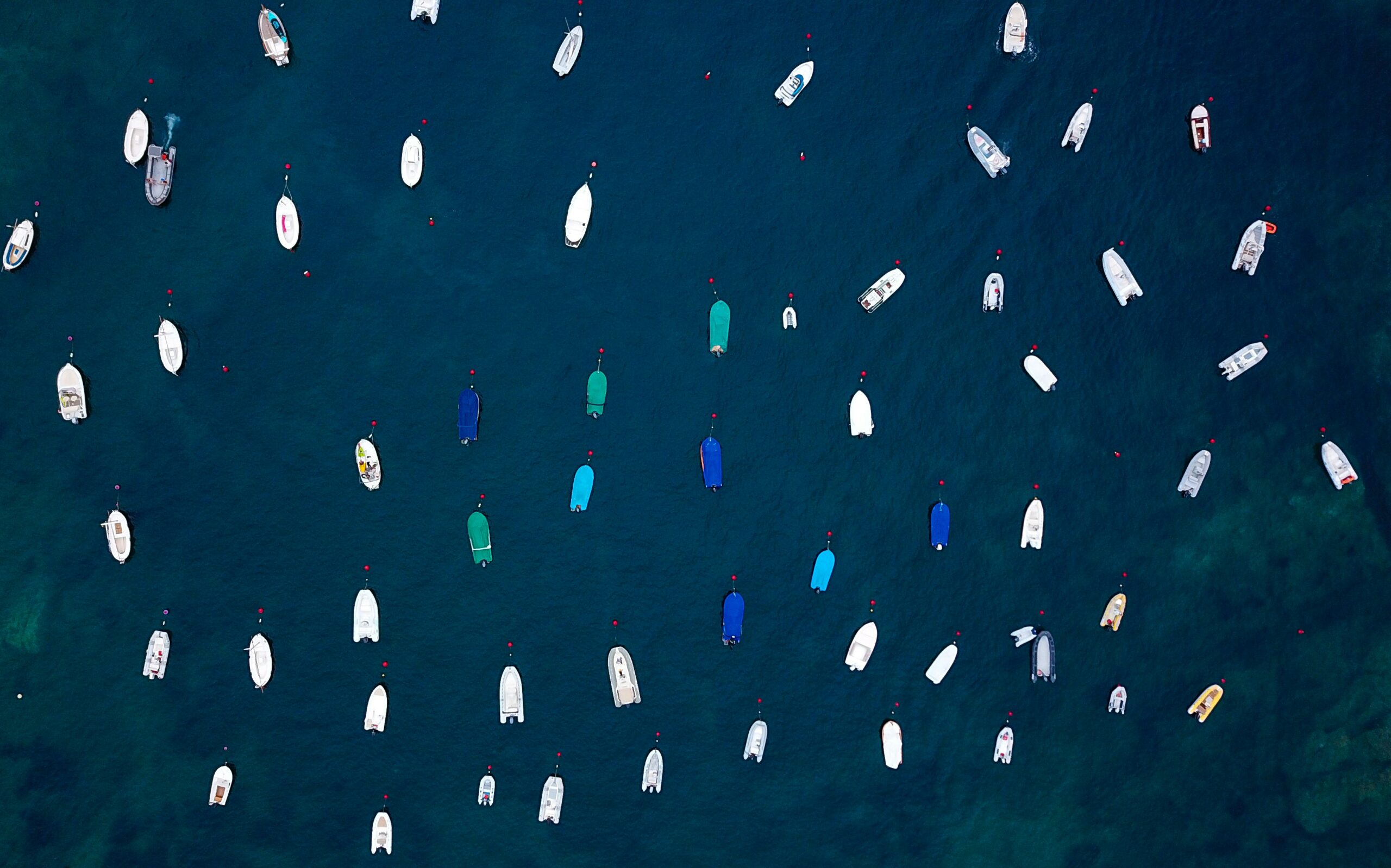
Photo by Berti Benbanaste
Seagrass damaged by anchoring in Studland Bay is recovering strongly since eco-moorings were introduced, according to new research highlighted by the Marine Management Organisation (MMO) on 19 October. In the area where the first moorings were trialled, bare patches in the seagrass shrank by an average of 93.6% between 2021 and 2025.
The scheme behind that recovery is under financial strain. The Studland Bay Marine Partnership, which runs the moorings, told Practical Boat Owner that around half of the boaters using them are not paying the mooring fee, leaving it short of the income needed to maintain them.
Every scar healing
Studland Bay, off the Dorset coast, was designated a Marine Conservation Zone in 2019 and holds one of the UK’s most significant seagrass beds. It provides habitat for protected species including seahorses, pipefish and rays, and nursery grounds for commercially important fish. The MMO introduced a voluntary no anchor zone in 2021, working with the partnership to find ways for boaters to keep using the bay without damaging the seagrass.
Unlike traditional moorings, whose chains drag across the seabed as boats swing with wind and tide, eco-moorings use a helical screw drilled into the seabed and an elasticated riser connected to a surface buoy. A £186,000 MMO grant through the Fisheries and Seafood Scheme in 2023 helped fund 57 additional moorings, bringing the total in the bay to 87.
Research by Kira Dunn at the University of Southampton analysed five years of monitoring data, using side-scan sonar, historical satellite imagery and annual surveys, to track 39 damaged areas of seabed. Every anchor chain scar examined showed signs of healing once disturbance stopped. Around 57 square metres recovered each year in the first trial area. In a second area, where traditional chain moorings stayed in place until 2023, scars still shrank by 65.4%, but recovery only began after the switch.
David Brown, Chair of the Studland Bay Marine Partnership steering group and Restore Nature lead for the National Trust, said: “We had previously mapped all the anchor scars in the seagrass, and this research shows that every one of them is healing, with new seagrass growing back.”
Jessica Churchill-Bissett, Head of Marine Conservation (Wildlife) at the MMO, described Studland Bay as “a case study for how MMO can support coastal communities to deliver proportionate, practical and effective conservation initiatives.”
A model that depends on paying users
Maintaining the moorings costs around £100,000 a year, falling to £70,000 to £80,000 once the partnership can trim costs such as public engagement. The money comes from a mix of mooring fees and partner contributions.
“We believe 50% of users are not paying the modest fee (£7.50 for four hours, £15 overnight),” Brown told Practical Boat Owner. “If we are unable to maintain and redeploy the moorings each spring, it puts the project at risk, potentially leading to a return to anchoring.”
In his view, that could lead the MMO to make the area a compulsory no anchor zone and effectively end boating access to the bay. The MMO has not commented on that possibility in its own announcement.
Compliance with the voluntary zone itself is reported to be good. Jim Atkins, a former Commodore of Christchurch Sailing Club who initially opposed the zone and now speaks for the partnership, put it at “about 90% or more”. He said the payment rate had risen from 30% last year to 50% this year thanks to a team out on the water.
Wider lessons
The MMO is using Studland as an example in its Your Coast campaign and call for evidence, which seeks views on how recreational activities, including anchoring, affect protected features in Marine Protected Areas. It has also published guidance on moorings, consents and marine licensing for other coastal communities considering similar schemes.
The two halves of the story belong together. The evidence that eco-moorings work is now strong. Whether schemes like Studland can be sustained on voluntary payments, or need a more secure funding model, is the question other sites will have to answer before they follow it.