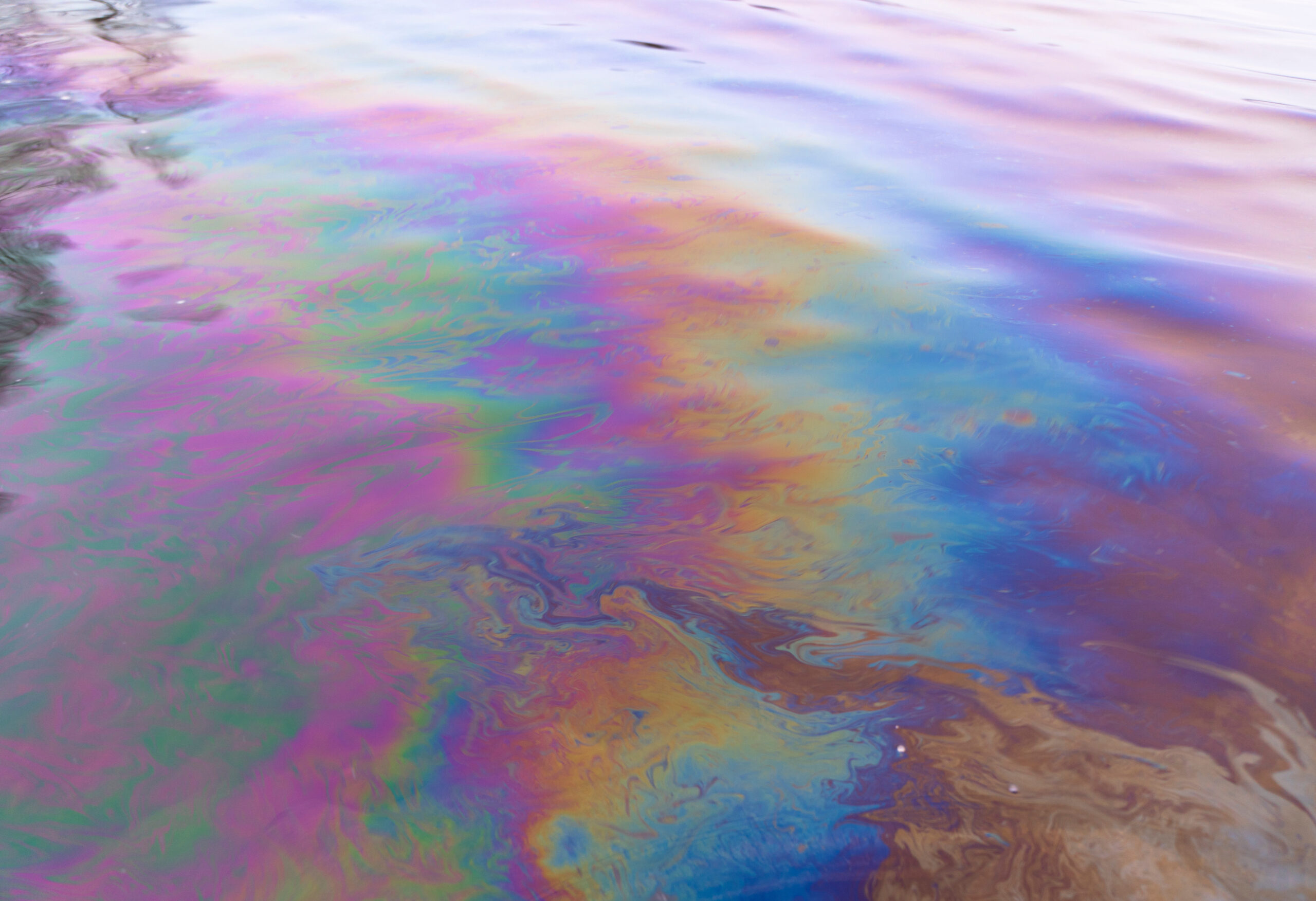
Image description: Water with patches of petrol and oil on the surface.
A significant pollution incident affecting 4km of river
A major fuel spill originating from a GE Aerospace site near Taffs Well in South Wales sent kerosene spreading across almost 4km of the River Taff from 16 October. GE Aerospace confirmed that fuel entered the river during repair work at its site, and Natural Resources Wales (NRW) identified the source on the evening of Friday 16 October.
Response and containment
Residents described the smell as overwhelming, “like a petrol station”, with some reporting burning eyes and sleepless nights. Public Health Wales advised people to keep windows and doors closed, avoid contact with the water, and call NHS 111 if they felt unwell. Reports from residents suggested up to 25,000 litres of kerosene had entered the river, though NRW has not confirmed this figure officially.
NRW worked alongside South Wales Fire and Rescue Service and specialist drainage contractors to contain and remove the fuel. Due to the high flows and width of the River Taff, conventional fuel-absorbent booms could not be deployed across the channel; instead, large quantities of absorbent materials were placed at the confluence between the affected tributary and the main river. Water Magazine reports that NRW used drone surveys and harmless green tracing dye to track water flows through complex underground drainage systems and establish the pollution’s route.
By Wednesday 21 October, NRW confirmed the source of the leak had been stopped. The regulator said the rapid multi-agency response had significantly reduced the amount of fuel reaching the river, though environmental assessment work is continuing.
Environmental impact still being assessed
NRW confirmed that dead fish had been recovered from the river, with an updated BBC report noting fewer than ten fish deaths recorded, though impacts to aquatic invertebrates were also identified. A former hazardous materials officer with South Wales Fire and Rescue Service warned at the height of the incident that restoration could take “years not months,” describing kerosene as a persistent pollutant that does not mix with water. NRW said evidence was being compiled as part of an ongoing investigation into how the fuel entered the drainage system, and that longer-term effects on wildlife and river ecology were still being considered. Water and soil samples have been collected for analysis.
UK river systems vulnerable to industrial pollution
This incident is a reminder of the vulnerability of river systems to industrial pollution events, particularly where complex underground drainage infrastructure creates challenges for rapid source identification and containment. The case also highlights the critical role of regulators such as NRW in coordinating multi-agency responses, and the importance of robust evidence gathering from the outset to support any subsequent enforcement action. GE Aerospace’s statement that it is working closely with NRW suggests a cooperative response, but the question of how fuel entered the drainage system, and whether adequate safeguards were in place, will be central to the ongoing investigation.
Read more
BBC News: Fuel leak spreads more than two miles along River Taff and Fuel leak which killed fish in River Taff stopped
ITV News: Investigation into source of kerosene leak spreading four kilometres into River Taff