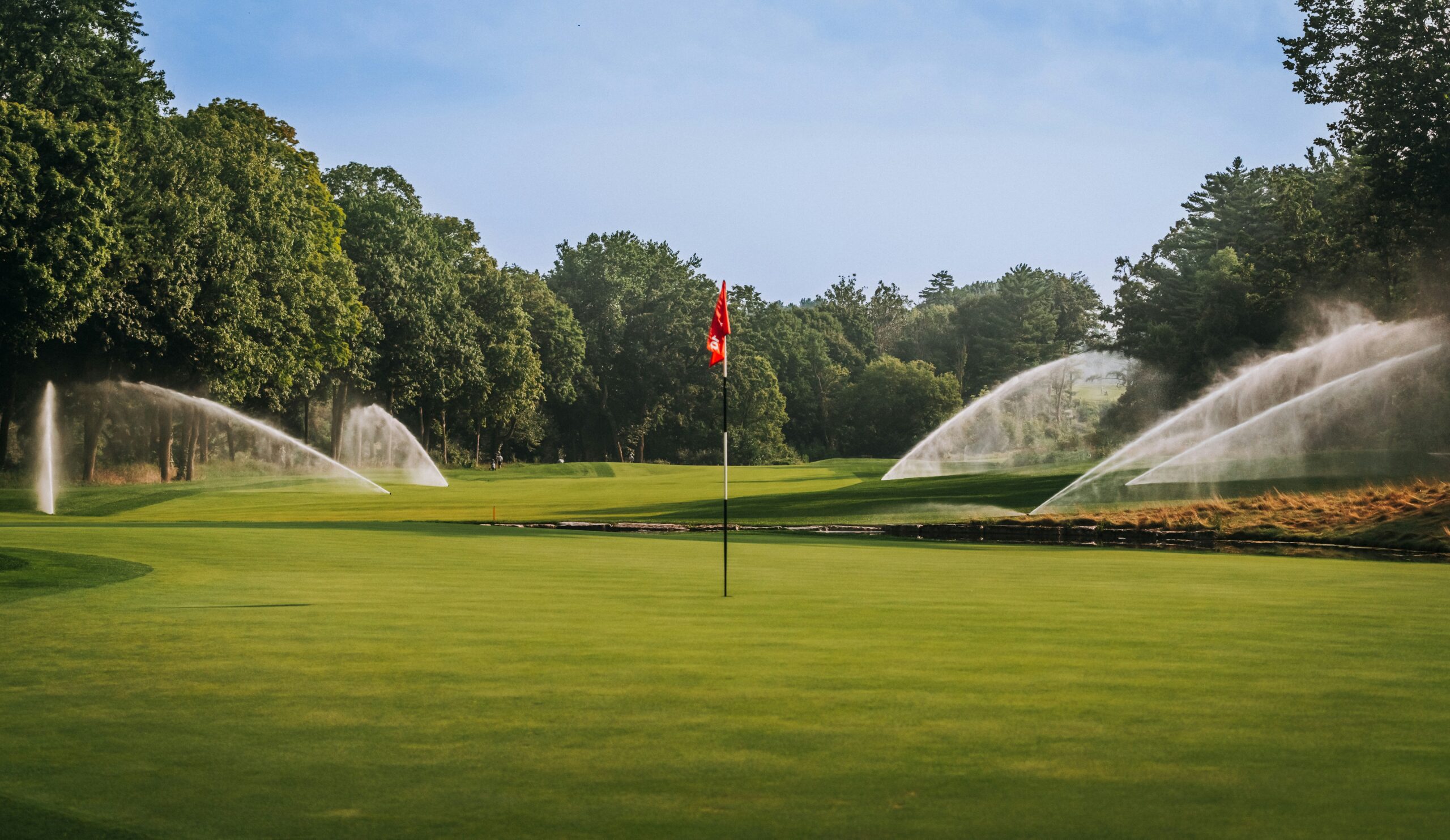
 Photo description: A golf course green with sprinklers spraying water across the grass. A red flag marks the hole, standing against a backdrop of mature trees. Photo by Keith Tanner on Unsplash
Non-essential use bans could ban certain businesses using mains water for irrigation and washing
Three water companies, South East Water, Southern Water and South West Water, have applied to Defra for non-essential use bans that would extend water restrictions from households to businesses. If granted, the bans could bar golf clubs, private schools and commercial car washes from using mains water for irrigation and washing.
Eleven areas of England remain in drought, with Yorkshire the latest to enter drought status on 9 October. Nineteen reservoirs or reservoir groups in England and Wales are less than 50% full, and eight are exceptionally low. Overall reservoir levels stand at 54%, some 21% below what would normally be expected in autumn. The Met Office has said above-average rainfall is needed over a sustained seven-month period to bring all areas out of drought, yet England received only around 65% of its typical September rainfall, with eastern and southern areas recording the greatest deficit.
Critical pressure on rivers and wildlife
River flows in seven areas of England are exceptionally low, including the River Derwent in the north-east, the rivers Yare and Ely Ouse in east England, and the River Tone and the Hampshire Avon catchments in the south-west. Mark Owen, head of fisheries at the Angling Trust, warned that when rivers fall to such levels they can take years to recover, with severe consequences for fish spawning and river health. He backed further restrictions on non-essential water use but also called for urgent action on leakage and unsustainable abstraction, pointing out the inconsistency of banning domestic car washing while commercial car washes continue operating unrestricted. In Hampshire, Southern Water is simultaneously pursuing a drought order on the River Test that would allow it to abstract water from the chalk stream at flows below ecologically safe levels.
What’s next
Falling reservoir levels, low river flows, ecological stress and growing demand pressure are all converging simultaneously this Autumn, requiring water companies to pursue multiple regulatory interventions at once as their impacts compound. Defra has yet to respond to the non-essential use ban applications, adding a layer of uncertainty at a critical juncture. For the wider sector, this drought reinforces the urgency of the long-term water resources planning debate, including investment in storage, transfer infrastructure and demand reduction. As South West Water’s director of drinking water services noted, public understanding of drought recovery timelines remains limited, creating a communication challenge that the sector will need to manage carefully in the weeks ahead.
Read more:
The Guardian: further coverage
The Independent: further coverage