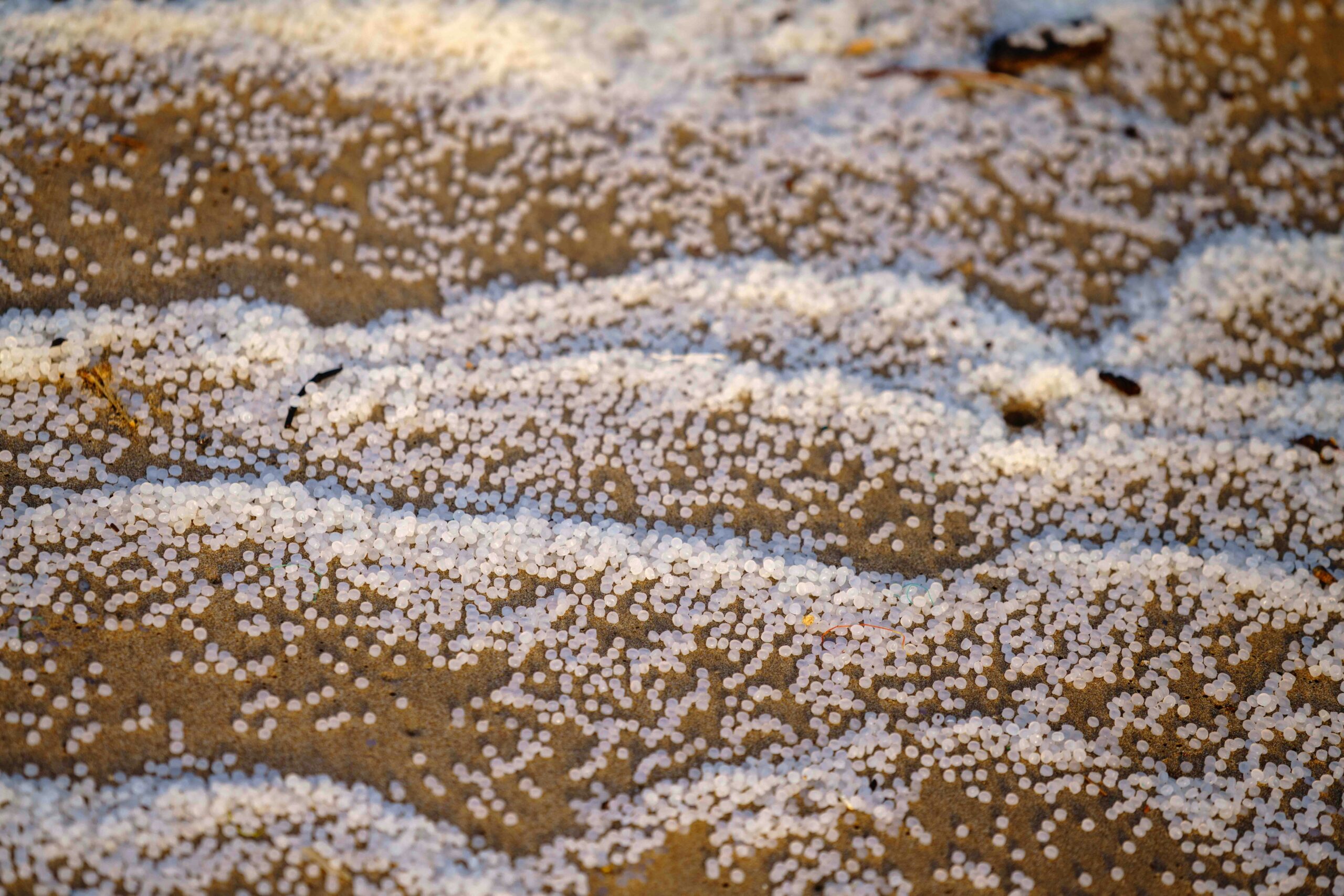
 Image description: Close up of nurdles strewn across sand. Photo by Sören Funk on Unsplash
Nurdles discovered along the coast of Denmark are likely to originate from a spill in north-east England, according to the country’s environment agency and BBC reports.
On 19 July around 18 tonnes of plastic nurdles, consisting of hundreds of millions of tiny balls, spilled into the River Tyne after a crash between ships at the Port of Tyne, in what is believed to be the worst recorded incident of its type in Europe.
Signe Simonsen, the head of startup Race for Oceans Technology, first spotted the nurdles on the island of Mandø in Denmark on 26 September. Now masses of plastic pellets have been confirmed along the western coast of Denmark.
The Danish Environment Protection Agency has suggested originated from the River Tyne spill in July, after carrying out tests on the microplastics. It said the nurdles had the same characteristics as the one billion which had been spilled in north-east England and their arrival in Denmark in late September and early October, about 390 miles (630km) away, was consistent with “current patterns and circulation in the North Sea”. The agency, which the BBC reports tested the pellets alongside Aarhus University, said another factor which suggested the Danish nurdles were the same as those spilled in the River Tyne was the fact there were no other recorded spills in the area that could explain their presence.
About 28% of the nurdles have been recovered as of September, as per the BBC’s coverage.
Read more:
BBC News: Denmark nurdles may be from Tyne spill, agency says
BBC News: What do we still need to know about the Tyne nurdle spill?
OCF News: Port boss calls for nurdle reclassification after billion-pellet North Sea spill
OCF News: One billion plastic nurdles enter the River Tyne after ship collision