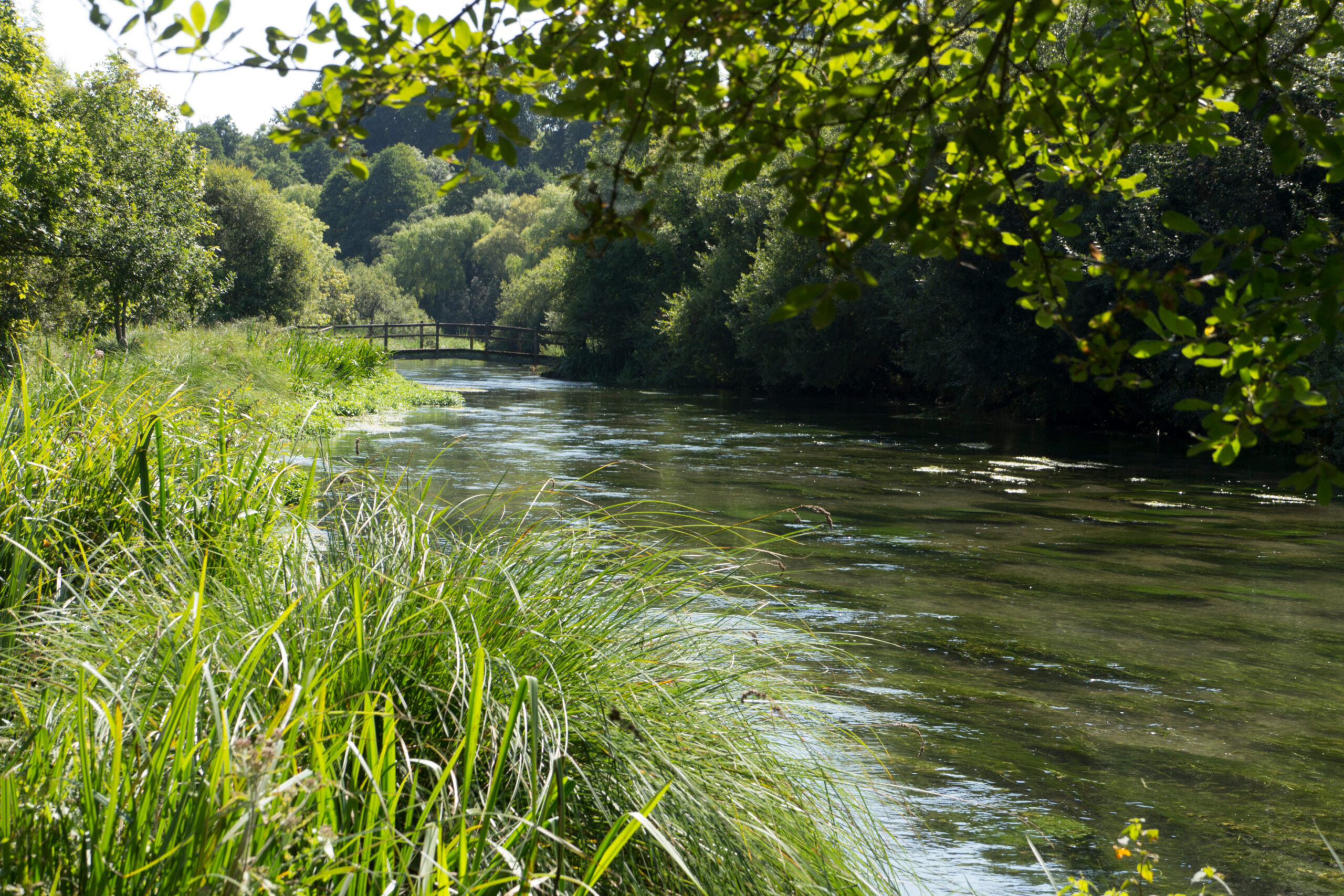
Image description: The River Itchen flows from mid-Hampshire to join with Southampton Water in the city of Southampton. The river has a total length of 28 miles (45 km), and is noted as one of the world’s premier chalk streams for fly fishing,
A new report from The Wildlife Trusts, Route Map to Recovery – Fixing Nature in the UK, published ahead of the UN Convention on Biological Diversity’s COP17 conference in Armenia, concludes that the UK is on course to meet just three of the 23 targets set under the Global Biodiversity Framework (GBF) by 2030. The GBF was agreed by 196 countries in 2022 and actively championed by the UK Government. COP17 will deliver the first major global stocktake of progress against these targets, making the timing of the report particularly significant.
Freshwater ecosystems as national infrastructure
The Wildlife Trusts explicitly identifies healthy rivers, soils and wetlands as underpinning national food and water security, and calls for nature to be treated as essential national infrastructure. Freshwater ecosystems, including rivers, wetlands, floodplains and peatlands, are central to both the GBF targets and to the water sector’s own environmental obligations under the Water Framework Directive and its successor frameworks. Failure to restore these ecosystems will compound the supply-demand challenges already facing water companies, including reduced natural water retention, increased diffuse pollution, and greater drought and flood vulnerability.
The 30×30 commitment
The UK Government has committed to protecting and effectively managing 30% of land, freshwater, and sea for nature by 2030. In England, a framework plan is in place, but the report identifies significant gaps in implementation detail and accountability mechanisms. For the water sector, this is of particular relevance given the role of catchment-scale habitat restoration in improving raw water quality, reducing treatment costs, and supporting biodiversity net gain obligations linked to infrastructure investment.
Areas of progress
The report acknowledges meaningful steps forward, including the publication of Local Nature Recovery Strategies across most of England, a policy mechanism with direct implications for water company catchment management strategies, and the ban on sand eel fishing in English and Scottish waters. The report says many of the policies and plans needed to support nature recovery are already in place or being developed, but argues that these will only make a significant difference if they are implemented with sufficient funding, effective action and clear accountability.
COP17 (19–30 October 2026) will represent a critical moment for UK biodiversity policy. The report’s framing of nature recovery as a national security and infrastructure issue signals a potential shift in the political and regulatory language around environmental obligations that may have implications for future price review settlements.
Read more
The Wildlife Trusts: Full report and summary
Water Magazine: Further coverage