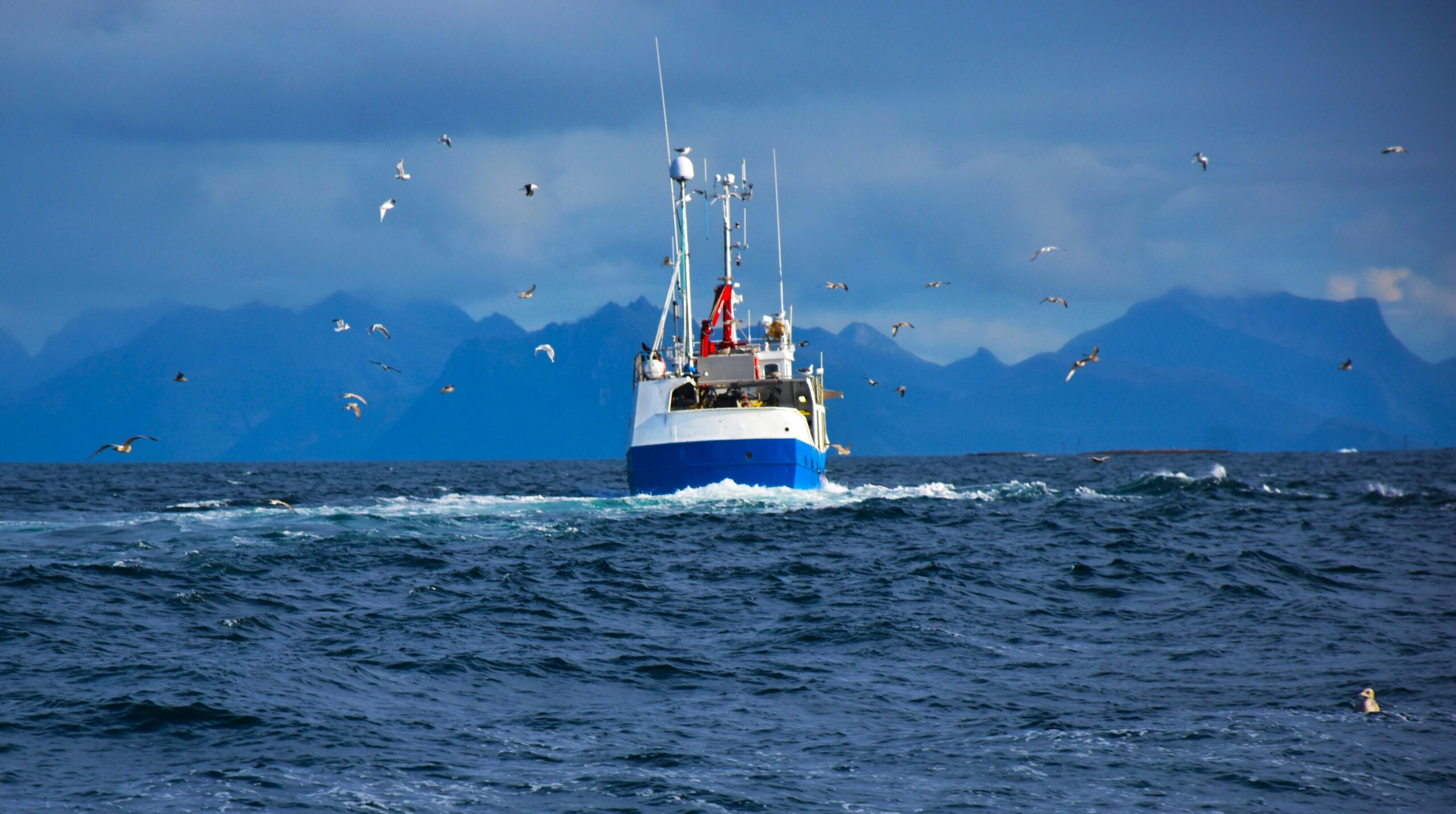
Photo by Federico Calcinai
The Marine Management Organisation (MMO) is urging UK fishermen to act now on a wave of new EU fisheries control requirements that apply whenever UK vessels fish in the waters of EU Member States. The rules cover gear marking, electronic logbooks, catch recording, port weighing and vessel tracking. Some have applied since 10 January 2026, and further changes are being phased in up to 2028.
The requirements stem from the EU’s overhaul of its fisheries control system. According to the European Commission, the revised Control Regulation (EU) 2023/2842 entered into force in January 2024. Its central aim is digitalisation, with tracking for all fishing vessels and electronic recording of all catches. Because these are EU rules, they are enforced by Member State authorities rather than MMO officers. As The Fishing Daily reports, the MMO has made clear that responsibility for compliance rests with vessel operators and masters while discussions with the European Commission and Member States on implementation continue.
What has already changed
The MMO’s industry advisory, published alongside an update for vessels operating in EU waters, sets out several differences from UK practice that skippers need to be aware of.
Passive gear must carry permanent labels showing the vessel’s port letters and number. The EU rules on where those labels go differ from UK rules for nets, lines and pots, and the prescribed label size no longer applies in EU waters.
For vessels of 12 metres and over, every fishing operation in EU waters now needs its own entry in the electronic logbook. For fixed gear, that means each net or string of pots is recorded separately. Retained catch must be recorded in liveweight with no minimum threshold, unlike the 50kg threshold in UK waters, and discards must be estimated. Vessels must also submit catch reports when entering and leaving EU waters, and send logbook data at least daily.
Tracking has also tightened. Since January, vessels in designated EU fishing restricted areas, and in a five-mile buffer around them, must transmit their position every 30 minutes rather than every two hours. The MMO’s Fisheries Monitoring Centre is working with VMS supplier AST on a geofencing update that will switch reporting rates automatically, The Fishing Daily notes.
What comes next
The next phase begins in January 2027. From 10 January, trawl doors and codend selvedges used in EU waters must display the vessel’s port letters and number. From 11 January, new weighing requirements apply to landings in EU ports. Defra is still seeking clarity on how these will work when catch is transported to a first sale point in the same or another Member State.
From 10 July 2027, the 30-minute VMS reporting rate will extend across all EU waters. The advisory notes that operators will bear the extra costs.
From 10 January 2028, under-12 metre vessels fishing in EU waters will face full electronic logbook requirements, a significant change for the smaller fleet.
A shared challenge across fleets
UK vessels are not alone in adapting. Ireland’s Sea-Fisheries Protection Authority issued guidance to its fleet ahead of the January start date. It set out changes such as compulsory VMS for all vessels of 12 metres and over, haul-by-haul recording and electronic sales notes within 48 hours of first sale.
For UK operators, the practical advice is to check gear marking against EU placement rules, review logbook routines and VMS contracts, and seek guidance from the relevant Member State authority where details remain unresolved.